 Fundraising Fox
Vulcan Augmetics
Techstars '21Ho Chi Minh City, VN · Founded 2018 · 26 employees on LinkedIn · 4 known investors
Find your way into Vulcan Augmetics
Sign up to see every warm intro you have to Vulcan Augmetics
- Paths you didn't know you had: your email and LinkedIn already hold routes to the Vulcan Augmetics team. We find them for you
- 2nd- and 3rd-degree connections: the friend-of-a-friend routes that take hours to manually find through your inbox or LinkedIn
- Answers now, not in days: momentum is everything in a raise. Skip asking around whether someone knows someone
Days of research, done the moment you sign in, with every route ranked by how warm it is.
Vulcan Augmetics develops upper-limb prosthetic solutions and smart sensor systems for rehabilitation and patient care. The company serves clinics and patients globally, with particular focus on emerging markets and regions with limited access to advanced medical technology.
Also known as Vulcan Augmetics Pte. Ltd. · Vulcan Social Enterprise Co., Ltd.
Founders & leadership
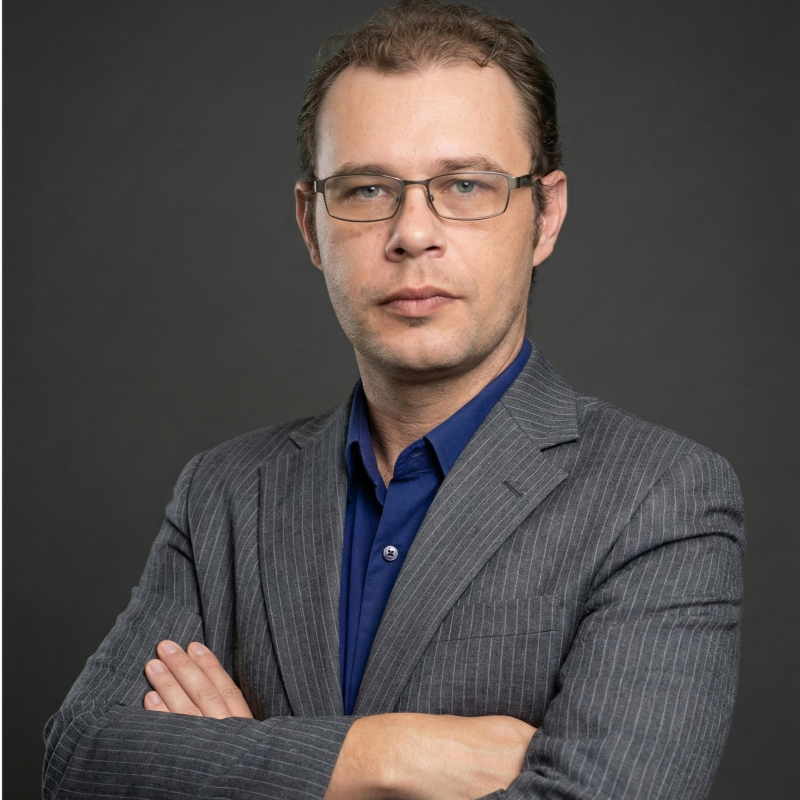
Vulcan Augmetics was founded in 2018 by Rafael Masters.

Investors · 4
How we know: Quest Ventures's portfolio page · funding news · questventures.com · open dataset · 5k.vc investor directory · Not right? Tell us

How we know: the Techstars portfolio · funding news · open dataset · Top 3000 Accelerator Startups (no YC) 2026-08 · open dataset · 5k.vc investor directory · Not right? Tell us

How we know: funding news · research · questventures.com · Not right? Tell us
Funding
SEC filings, press & company announcements- Undisclosed amountseed fundingOct 2023 · 3 sourcesSource ↗
Source: company announcements and press reports — follow each round's link for the claim.
Company profile
researched Sep 2026Vulcan Augmetics develops upper-limb prosthetic devices and the electromyography (EMG) sensing and control systems that drive them. Its product line covers a multi-grip myoelectric hand, an electric elbow aimed at short or shoulder-level residual limbs, a Push-X quick-swap module for dynamic exercises such as push-ups, and pre-configured complete packages for transradial (below-elbow) and transhumeral (above-elbow) cases. The Vulcan Control Solution is a wearable EMG sensor band using threshold recognition; the company states sensors can be placed anywhere on the residual limb without locating precise myo-sites, and that a one-minute auto-calibration captures the patient's biosignals and range of motion. A separate line, Biotrix, applies wearable smart sensors to musculoskeletal and neurorehabilitation care.
The company positions its offering around clinical workflow: objective real-time EMG feedback to assess a patient's readiness for myoelectric fitting, simplified fabrication and socket integration, and app-based calibration with remote support for prosthetists. It reports fittings on patients with weak signals, bilateral amputations, short residual limbs and other challenging anatomies. Earlier coverage described a modular, 3D-printed and maker-manufactured approach in which components and occupation-specific attachments can be swapped and upgraded over time, and in which open-source software links designers in different locations.
Vulcan Augmetics Pte. Ltd. (registration 202133119C) lists a Singapore headquarters at Hong Lim Complex and an operating office in Ho Chi Minh City, Vietnam; an earlier profile lists the legal entity Vulcan Social Enterprise Co., Ltd. in Ho Chi Minh City.
Founding story
The venture originated inside a venture builder in Ho Chi Minh City as an incubated project called "Ironman," whose early team consisted of founder Rafael Masters, Indian CTO Akshay Sharma, two engineers and a freelancer. Trịnh Khánh Hạ (Ella Trinh), who had studied hotel management at college in Vietnam, then economics in the UK, and had previously founded and wound down a shopping platform called Boss Lady, was introduced to the venture builder's founder and joined the Ironman project as project manager in 2018, becoming its first full-time member while others worked part-time. After Sharma left to focus on another startup, she took over his equity and formally became co-founder. The project was incorporated and structured as a social enterprise.
Business model
Vulcan sells prosthetic hardware and control systems to clinics and prosthetists as well as directly to individual amputees, serving both self-paying patients and insured patients across different healthcare systems. Earlier descriptions outlined a B2B and B2C model built on modular, upgradeable devices, with follow-on sales of modules, attachments, upgrades and replacements over the life of the device, plus an online ordering platform.
Revenue comes from sales of prosthetic devices, control solutions and complete upper-limb packages, with the modular design intended to generate repeat sales of add-on modules, upgrades and replacement parts. Retail pricing for its first offerings was reported at $1,000-$1,200 per below-elbow arm, against an industry standard of roughly $5,000 to tens of thousands of dollars.
Traction
By early 2021 nearly 20 amputees in Vietnam had been fitted following the October 2020 launch. The company reports supporting clinics and patients in more than 17 countries, CE certification in 2024, entry into over 10 countries and clinical pilots of a rehabilitation smart sensor system in 2025. An external profile listed 21 to 40 employees and total funding of $220,000 with investor CrossFund.
Latest developments
In 2025 Vulcan introduced complete upper-limb packages for transradial and transhumeral patients and started clinical pilots of its first smart sensor system for rehabilitation. For 2026 it plans a commercial launch of expanded smart sensor solutions, extending from prosthetic care into broader patient care, alongside its Biotrix wearable sensor line for musculoskeletal and neurorehabilitation.
▸Full profile — market position, technology, go-to-market, geography, history, risks & controversies
Market position
Vulcan positions itself as an affordable, certified alternative to conventional myoelectric prosthetics, targeting underserved amputee populations in developing markets; investor material cites an estimated 57 million amputees globally, of which over 500,000 are in Vietnam. Its stated pricing of $1,000-$1,200 per below-elbow arm was reported as well below the $5,000-plus industry standard and below the roughly $3,000 price cited for UK-based Open Bionics. The MyoBand sensor technology is described by the company as giving it a distinct position in the myoelectric and bionic arm market.
Differentiators the company claims include sensor placement anywhere on the residual limb without myo-site mapping, one-minute automatic calibration, pre-assembled complete packages for faster socket integration, modular and upgradeable components that lower maintenance cost, low price relative to conventional myoelectric arms, and CE certification as a medical device manufacturer.
Technology
Core technology is surface EMG biosignal sensing: a wearable sensor band using threshold recognition that does not require precise myo-site placement, real-time visualisation of muscle activity for clinical assessment, and one-minute automatic calibration of biosignals and range of motion. Products include a multi-grip myoelectric hand supporting 30+ practical activities with manual grip switching, a digitally calibrated electric elbow, and a quick-swap Push-X module. Manufacturing and design have used 3D printing and injection moulding with open-source design collaboration software. The company describes its prosthetics as AI-powered and is extending its sensor platform into rehabilitation and broader patient-care data applications.
Go-to-market
Vulcan sells through partner clinics and distributors in listed countries while also taking direct enquiries and registrations from amputees via its website, offering demo requests, clinic-focused support, downloadable clinician resources, app-based calibration tools and remote assistance. It has cited partner and programme relationships with institutions including Harvard Business School, Cambridge Judge Business School, UNDP, the NVIDIA Inception Program, raiSE Singapore and APAC Med.
Upper-limb amputees, including transradial and transhumeral cases and patients with short residual limbs, weak signals or bilateral amputation; prosthetic clinics, clinicians and CPOs; and rehabilitation providers. The company focuses on emerging markets and conflict-affected regions where access to advanced prosthetic care is limited, and on returning amputees to employment and independence.
Geography
Headquartered in Singapore with an operating office in Ho Chi Minh City, Vietnam. The company states presence across 17+ countries, listing Vietnam, Singapore, Taiwan, Malaysia, India, Philippines, Indonesia, Cambodia, Kazakhstan, Egypt, Turkey, Syria, Saudi Arabia, Ukraine, Australia, Colombia, Brazil and Iraq, and has also cited orders from Poland.
History
The company dates its foundation to 2018, starting with a small team of engineers and founders. After roughly three years of research and development it officially launched commercially in October 2020, having fitted nearly 20 amputees across Vietnam by early 2021. In 2021 it launched the Mark 9.7 Flex Hand, its first multi-grip myoelectric hand, followed in 2022 by the lighter Mark 9.9 hand and the MyoBand, its first EMG control solution in a wearable band, trialled with patients in Vietnam. In 2023 it began international expansion, including India, and disclosed seed backing from Quest Ventures. In 2024 it obtained CE certification and expanded to Ukraine, Egypt and Turkey. In 2025 it introduced complete transradial and transhumeral upper-limb packages and began clinical pilots of a smart sensor system for rehabilitation, with a commercial launch of expanded smart sensor solutions planned for 2026.
Risks & controversies
The company operates as a social enterprise serving price-sensitive, largely self-paying patients in emerging markets and conflict-affected countries, which constrains pricing; co-founder Trịnh Khánh Hạ has described personal financial strain and reduced founder salaries during the early startup stage, and an earlier venture she led failed after eight months for lack of capital. Public data on the company is inconsistent: one third-party profile lists a 2017 founding date and a different legal entity than the company's own stated 2018 founding and Singapore registration.
Compiled by commissioned research from 9 cited public sources — announcements, filings, and press listed under research sources below.
Key figures
latest reportedCompany-reported or press-reported figures, each dated to when it was claimed — not independently audited.
Related companies · 2
.jpg)

Companies working in the same space as Vulcan Augmetics.
Timeline · 8
launches, deals, and filingsIntroduced full Vulcan upper-limb packages and launched clinical pilots for its first smart sensor system for rehabilitation.
Quest Ventures announced backing of Vulcan Augmetics; CEO Rafael Masters said the company received seed funding from Quest Ventures alongside raiSE, which also helped secure early pilot programs.
Released the lighter, stronger Mark 9.9 hand and the MyoBand, Vulcan's first EMG control solution using a wearable band, tested with patients in Vietnam.
Vulcan Augmetics officially launched its prosthetics in October 2020 following roughly three years of R&D.
Dated company events from announcements, filings, and press; legal rows summarize public dockets and regulator releases.
▸Research sources · 9
primary sources listed
- Vulcan Augmeticswearevulcan.com · web
9 public sources were cited for this profile; the first-party ones are listed here.
Frequently asked questions
- What does Vulcan Augmetics do?
- Vulcan Augmetics builds affordable myoelectric upper-limb prosthetics and EMG sensor systems for clinics and amputees in emerging markets.
- Who founded Vulcan Augmetics?
- Vulcan Augmetics was founded by Rafael Masters in 2018.
- Who are Vulcan Augmetics's investors?
- Vulcan Augmetics's investors include Quest Ventures, Techstars, The Ventures Co, RAISE.
- Where is Vulcan Augmetics headquartered?
- Vulcan Augmetics is headquartered in Ho Chi Minh City, VN.