 Fundraising Fox
Telepatia AI
São Paulo, BR · Founded 2025 · 96 employees on LinkedIn · 14 known investors
Find your way into Telepatia AI
Sign up to see every warm intro you have to Telepatia AI
- Paths you didn't know you had: your email and LinkedIn already hold routes to the Telepatia AI team. We find them for you
- 2nd- and 3rd-degree connections: the friend-of-a-friend routes that take hours to manually find through your inbox or LinkedIn
- Answers now, not in days: momentum is everything in a raise. Skip asking around whether someone knows someone
Days of research, done the moment you sign in, with every route ranked by how warm it is.
Telepatia provides AI-powered tools for medical documentation and clinical decision support in Latin America, including real-time clinical note generation, evidence-based recommendations for physicians, healthcare system integration, and business intelligence for clinical operations.
Also known as Telepatia · Telepatía · Telepatía AI · Telepatia AI Inc.
Founders & leadership
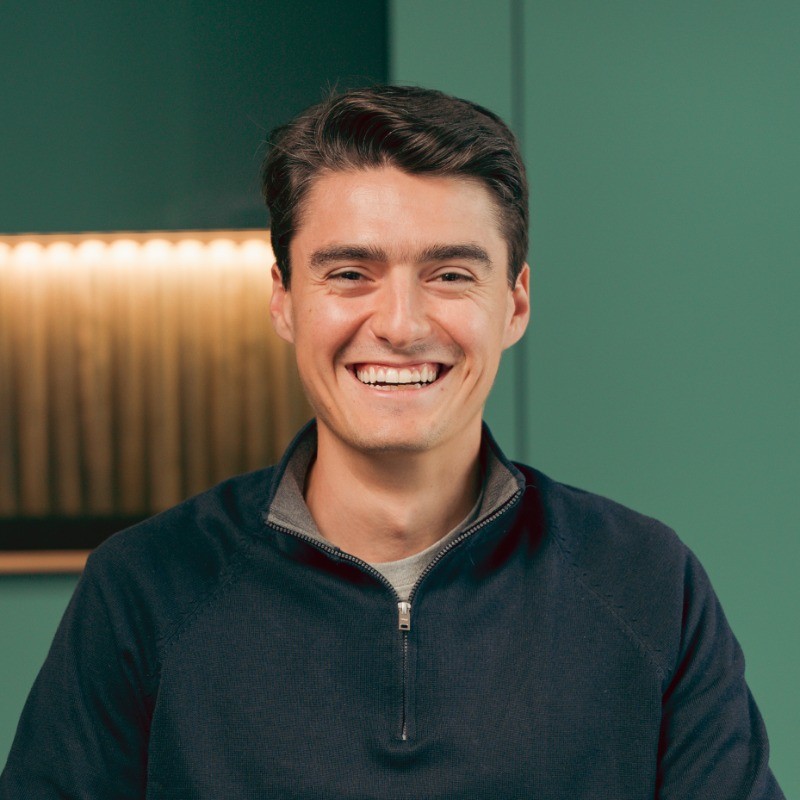
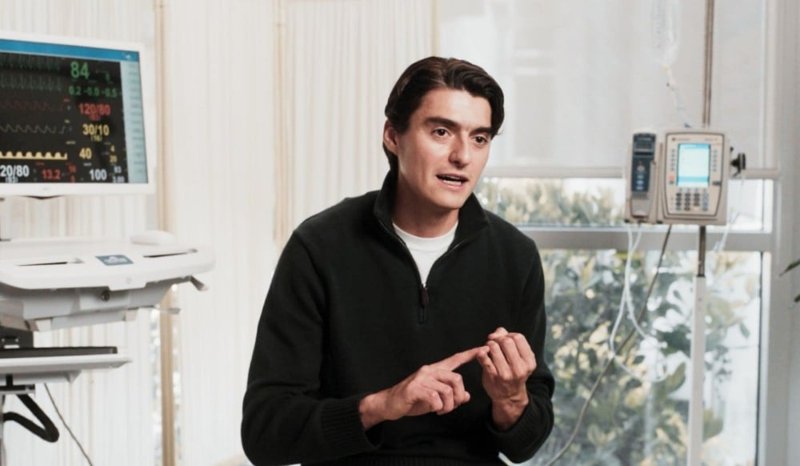
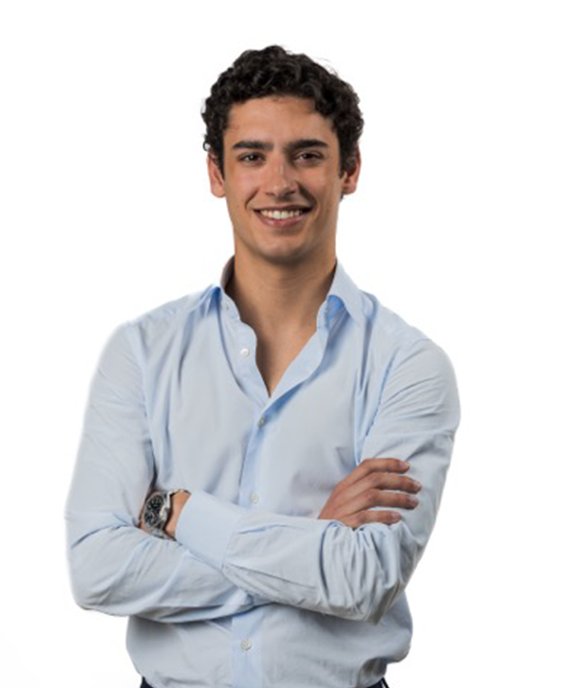
Telepatia AI was founded in 2025 by Nicolas Abad, Digital Health Healthtech Nicolas Abad, and Tomás Giraldo Hinestroza.
Investors · 14


How we know: Abstract Ventures's portfolio page · open dataset · 5k.vc investor directory · Not right? Tell us

How we know: a16z's portfolio · a partner's Signal profile · cryptobriefing.com · Not right? Tell us

How we know: Canary's portfolio page · funding news · research · nicolasabad.substack.com · open dataset · 5k.vc investor directory · Not right? Tell us
How we know: Nido Ventures's portfolio page · Not right? Tell us

How we know: PICUS CAPITAL's portfolio page · research · nicolasabad.substack.com · Not right? Tell us

How we know: StartX's portfolio page · Not right? Tell us

How we know: funding news · research · nicolasabad.substack.com · Not right? Tell us
Also in the syndicate · 6
Funding
SEC filings, press & company announcements$33M disclosed across 1 of 4 rounds · 2025–2026
- $33MSeries AJun 2026 · 2 sources
a16z (lead), A-Star, Abstract, Canary, David Vélez (Nubank), Picus, Shyam Sankar (Palantir), Simón Borrero (Rappi), SV Angel
Source ↗ - Undisclosed amountseed roundOct 2025 · 2 sourcesSource ↗
Source: company announcements and press reports — follow each round's link for the claim.
Company profile
researched Aug 2026Telepatia AI develops an artificial-intelligence platform for clinicians in Latin America, marketed as an "AI Doctor" and organized into four modules: an AI scribe that listens to doctor–patient conversations and generates structured clinical documentation in real time in each institution's format; an AI advisor/clinical copilot that provides evidence-based recommendations restricted to peer-reviewed literature and institutional protocols, flags missed exams and warns of drug interactions; an integration layer that connects to existing hospital and clinical record systems; and a business-intelligence module that converts clinical activity into metrics on protocol adherence, care quality and clinical performance (sources 0, 6, 7).
The consumer-facing products include an iOS app, an Android app and a Chrome extension, all published by Telepatia AI Inc. The mobile apps transcribe consultations and propose SOAP-format notes that physicians review, modify or reject before entry into the medical record; features shipped through 2025–2026 include audio-file upload, emergency-room shared notes, severity tiers, branch-level workflow selection and support for Spanish, Portuguese and English. The Chrome extension prepares notes from structured templates and copies the final text into supported EMR systems, with the professional retaining review and control (sources 1, 2, 3).
The company states compliance with LGPD, HIPAA and international security standards, end-to-end encryption, data anonymization practices and hospital-grade cloud infrastructure (sources 0, 2, 3).
Founding story
Founder and CEO Nicolás Abad has said that at the end of 2022 he lost his father, his previous company and his relationship within days. His father was a physician who died at 58 from a preventable cause and whose nickname was "Telepatia," owing to a photographic memory; ChatGPT launched days after his death, leading Abad to conclude that an AI doctor could have helped his father both as a patient and as a physician. Abad describes four of the five people closest to him as doctors and cites a lifelong friend, referred to as Tom, as his doctor co-founder (sources 0, 4, 7).
Business model
Telepatia sells to healthcare institutions — clinics, hospitals, health networks, health plans/operators and telemedicine platforms — while stating the product is free for independent physicians. Institutional value propositions are framed around documentation quality, protocol adherence, reduced clinical variability, KPI visibility for executives, and reduced medical loss ratio (sinistralidade) for payers (sources 0, 6).
Sources indicate an institutional (B2B) model with a free tier for independent doctors; specific pricing, contract structure or revenue figures are not disclosed in the material (source 0).
Traction
As of July 2026 the company reported being live in more than 25 public and private health institutions across Latin America, reaching more than 14 million patients and institutions representing over 100,000 doctors and nurses, with named customers including Hospital Mater Dei (Brazil) and Fundación Santa Fe de Bogotá (Colombia). In October 2025 it reported more than 2,000 doctors across 15+ institutions, including three JCI-accredited hospitals. Company-reported outcome figures include 90% adoption within institutions, an average 1.7 hours saved per doctor per day (later stated as up to two hours), protocol adherence rising from 84% to 99%, 96% of doctors reporting time savings, 85% of patients extremely likely to recommend a doctor using the tool, and the platform catching one in three medical errors before they reach the patient. App distribution metrics are modest: roughly 4,000 Chrome extension users, 1K+ Google Play downloads with a 3.4 rating from 18 reviews, and a 5.0 App Store rating from 2 ratings (sources 1, 2, 3, 4, 6, 7).
Latest developments
In July 2026 Telepatia announced a US$33 million Series A led by Andreessen Horowitz with participation from Shyam Sankar of Palantir, David Vélez of Nubank and Simón Borrero of Rappi plus existing investors, bringing total funding to US$42 million; the company's own site headlines the raise as funding to expand in Brazil. It also began a pilot at Hospital San Roque in Guacarí, Valle del Cauca, Colombia, serving a population of more than 35,000, and stated a goal of reaching half of Latin America's 1.9 million practicing doctors by 2027. App releases in mid-2026 added emergency-room shared notes, a clinical date calculator, an AI-consent sheet and Chile as a supported patient country (sources 0, 2, 3, 6, 7).
▸Full profile — market position, technology, go-to-market, geography, history, risks & controversies
Market position
Positioned as a Latin America-focused clinical AI company, described in coverage as having secured one of the largest digital health investments raised by a Latin American company via its US$33M Series A. The company frames its market opportunity around structural clinician shortages in the region (cited as roughly 43% fewer doctors and 65% fewer nurses per capita than the OECD average), roughly $700B in annual regional healthcare spending with about 1% going to software, and clinicians spending 40–70% of their time on non-care tasks (sources 4, 6).
The company emphasizes integration with more than 50 existing hospital record systems — including Epic and Hosvital — so institutions need not migrate infrastructure, distinguishing it from a standalone transcription tool. Other stated differentiators are a clinical advisor limited to peer-reviewed literature and institutional protocols rather than general web search, adaptation to each physician's documentation style, multilingual support for Spanish, Portuguese and English, free access for independent physicians, and a team composed largely of physicians and engineers recruited back to Latin America from institutions and companies including Stanford, Harvard, MD Anderson, Meta, Twitter/X and Microsoft (sources 0, 2, 4, 6, 7).
Technology
Speech-to-text transcription of clinical encounters with automatic generation of structured notes (including SOAP format) adapted to each clinician's style and each institution's documentation template; a retrieval-oriented clinical copilot that answers dosage, differential-diagnosis and management questions using scientific literature and institutional protocols; and integrations with more than 50 electronic health record systems, including Epic in the United States and Hosvital in Colombia. All AI output is presented as suggestions requiring physician review and approval (sources 0, 2, 3, 6, 7).
Go-to-market
Direct institutional sales in Latin America combined with bottom-up clinician adoption through free access for independent physicians and freely distributed mobile apps and a Chrome extension. The website offers an institutional intake form segmented by country (Colombia, Brazil, Peru, Mexico, Chile, Argentina) and institution type. Sales began in January 2025 while the founder was at Stanford, with the founder subsequently relocating to São Paulo (sources 0, 1, 2, 3, 4).
Physicians and nurses, and the institutions that employ them: clinics, hospitals, health networks, telemedicine platforms and health insurers/operators in Latin America. Deployments cited include Hospital Mater Dei (Brazil), Fundación Santa Fe de Bogotá (Colombia) and a rural pilot at Hospital San Roque in Guacarí, Colombia (sources 0, 6, 7).
Geography
Headquartered operationally in São Paulo, Brazil after the founder's move from Stanford; the company was founded in Medellín, Colombia and incubated at Stanford University, and Telepatia AI Inc. lists a US address at 735 Campus Dr, Stanford, California. Deployments span Brazil, Colombia, Mexico, Chile and Argentina, and the website also targets Peru; Chile was added as a supported patient country in a 2026 app release (sources 1, 2, 3, 4, 6, 7).
History
Telepatia began selling on January 20, 2025 while Abad was at Stanford. An iOS app version 1.0 was published in June 2025, followed by regular releases through version 1.5.0 in August 2026. By October 2025 the company reported more than 2,000 doctors across 15+ institutions, and it announced a $9M seed round led by A-Star that month. The founder relocated to São Paulo during 2025. In July 2026 the company announced a $33M Series A led by Andreessen Horowitz, taking total funding to $42M, and reported deployment in more than 25 institutions (sources 2, 4, 5, 6, 7).
Risks & controversies
Sources report no litigation or controversy. Notable diligence considerations from the material itself: most performance figures (time saved, protocol adherence, share of medical errors prevented, adoption rates) are company-reported and unaudited; sources disagree on the company's origin and base, describing it variously as a Brazilian healthtech, as founded in Medellín, Colombia and incubated at Stanford, and as a US-incorporated entity (Telepatia AI Inc., Stanford, California); institution counts differ across the July 2026 articles (more than 25 versus more than 30 institutions); consumer app distribution metrics are small relative to the claimed institutional footprint, and the Google Play listing shows a 3.4-star average and states that data is not encrypted, which sits alongside the company's stated end-to-end encryption and HIPAA/LGPD compliance claims (sources 0, 2, 3, 5, 6, 7).
Compiled by commissioned research from 8 cited public sources — announcements, filings, and press listed under research sources below.
Key figures
latest reportedCompany-reported or press-reported figures, each dated to when it was claimed — not independently audited.
Timeline · 5
launches, deals, and filingsTelepatía began a pilot at Hospital San Roque in Guacarí, Valle del Cauca, a rural municipality, targeting care access for more than 35,000 residents.
Telepatia announced $42 million in total funding including a $33 million Series A led by Andreessen Horowitz, with participation from Shyam Sankar (Palantir), David Vélez (Nubank), Simón Borrero (Rappi) and existing investors A-Star, Abstract, Canary, Picus and SV Angel. Capital is directed at expansion, including in Brazil.
$33M source ↗
Brazilian healthtech Telepatia AI raised a $9M seed round led by A-Star, with participation from Canary, Abstract, Picus, SV Angel, Nido and additional angels; proceeds earmarked for platform development and Latin American expansion.
$9M source ↗
Version 1.0 of the Telepatía medical documentation app was published on the Apple App Store by developer Telepatia AI Inc; subsequent releases added Spanish/Portuguese/English support, audio-file upload, emergency-room shared notes and other features through version 1.5.0.
After beginning to sell Telepatia while the founder was at Stanford in January 2025, the company moved its base to São Paulo, Brazil.
Dated company events from announcements, filings, and press; legal rows summarize public dockets and regulator releases.
▸Research sources · 8
primary sources listed
- Telepatia AItelepatia.ai · web
8 public sources were cited for this profile; the first-party ones are listed here.
Frequently asked questions
- What does Telepatia AI do?
- Latin American healthtech building an "AI Doctor" that documents consultations, advises clinicians and integrates with hospital records.
- Who founded Telepatia AI?
- Telepatia AI was founded by Nicolas Abad, Digital Health Healthtech Nicolas Abad, Tomás Giraldo Hinestroza in 2025.
- Who are Telepatia AI's investors?
- Telepatia AI's investors include A*, Abstract Ventures, Andreessen Horowitz, Canary, Nido Ventures, PICUS CAPITAL, StartX, SV Angel.
- How much funding has Telepatia AI raised?
- Telepatia AI has disclosed $33M raised across 1 of its 4 known rounds.
- Where is Telepatia AI headquartered?
- Telepatia AI is headquartered in São Paulo, BR.