 Fundraising Fox
Telepathic Technologies
Entrepreneur First '24New York, US · Founded 2024 · 1 known investors
Find your way into Telepathic Technologies
Sign up to see every warm intro you have to Telepathic Technologies
- Paths you didn't know you had: your email and LinkedIn already hold routes to the Telepathic Technologies team. We find them for you
- 2nd- and 3rd-degree connections: the friend-of-a-friend routes that take hours to manually find through your inbox or LinkedIn
- Answers now, not in days: momentum is everything in a raise. Skip asking around whether someone knows someone
Days of research, done the moment you sign in, with every route ranked by how warm it is.
Telepathic (Telepath Technologies) develops non-invasive brain-computer interfaces that read, interpret, and transmit neural signals in real time without surgery or implants. It combines hardware, software, and AI to enable communication and interaction between humans and machines.
Also known as Telepath Technologies · Telepathic
Founders & leadership
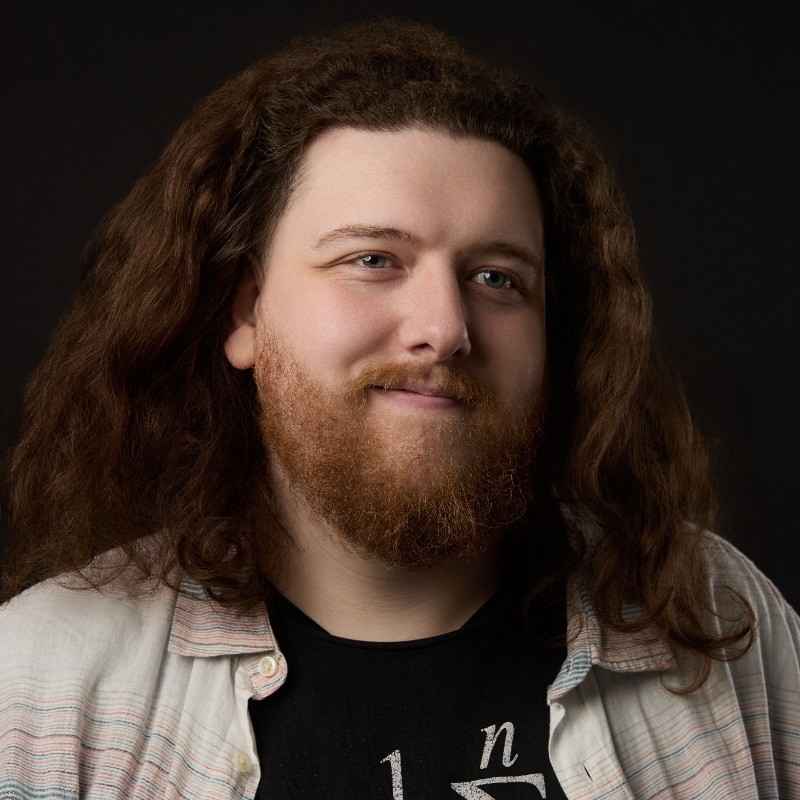
Telepathic Technologies was founded in 2024 by Noah Shamus and Ellery Buntel.

Investors · 1

How we know: the Entrepreneur First portfolio · open dataset · 5k.vc investor directory · Not right? Tell us
Company profile
researched Aug 2026Telepathic (Telepathic Technologies) develops non-invasive brain-computer interfaces (BCIs) that read, interpret and transmit neural signals in real time without surgery or implants. The company combines hardware, software and AI to deliver high-fidelity signal acquisition, real-time monitoring of cognitive states, and transmission of thought and intent between humans and machines. Its website solicits beta testers via a waitlist.
The underlying sensing approach is functional near-infrared spectroscopy (fNIRS), which infers brain activity from changes in blood oxygenation measured with near-infrared light. The device is described as a cap with multiple optodes placed in contact with the scalp and wired to a connector that interfaces with recording equipment, visually comparable to a motion-capture cap. Machine-learning models decode the resulting signals; because calibration is highly personalised, the company was reported to be building per-individual models, and factors such as perspiration can degrade optode contact and add signal noise.
The primary application described is silent, thought-based communication for U.S. military personnel. Rather than modelling the full English alphabet, the team focused on the 26-word NATO phonetic alphabet (Alpha, Bravo, Charlie, etc.), reporting 76% decoding accuracy on a subset of those words as of mid-2024. The stated use case is to replace the microphone in a warfighter's existing headset or helmet, enabling communication in environments where silence is required. The company has also been described as seeing dual-use potential beyond defense, including possible VR/XR applications, though nothing beyond defense is described as active work.
Founding story
Noah Shamus and Ellery Buntel met through their connection to Tufts University, where Shamus studied as an undergraduate and Buntel was a PhD student; Buntel left the PhD program and the two founded Telepathic around a shared interest in non-invasive BCIs. The company website states that Shamus declined a role at the Naval Surface Warfare Center to start the company. Early experiments were run with stroke patients before the founders redirected the work toward defense use cases.
Business model
Sources describe Telepathic as building an integrated hardware, software and AI system (an fNIRS-based scalp-worn cap plus machine-learning decoding models) intended for defense users, positioned as a replacement for the microphone in existing headset/helmet setups rather than a replacement for the headset itself. No pricing, contracting or commercial terms are described in the available sources.
Traction
Reported traction is early: 76% decoding accuracy on a subset of the NATO phonetic alphabet as of June 2024, prior testing with stroke patients, a public beta-tester waitlist on the company website, and a pre-seed round in progress as of mid-2024. No customers, contracts or revenue are disclosed in the sources.
Latest developments
The most recent company-specific reporting available dates from June 2024, when Telepathic was described as raising a pre-seed round from a San Francisco base and reporting 76% decoding accuracy on a subset of the NATO phonetic alphabet. The company website continues to recruit beta testers and lists a three-person team page including a strategic investor.
▸Full profile — market position, technology, go-to-market, geography, history, risks & controversies
Market position
Telepathic operates in the non-invasive segment of the brain-computer interface market, which sources divide into invasive approaches (exemplified by Neuralink's implanted sensor) and non-invasive approaches such as Telepathic's fNIRS cap. Coverage frames the company within a geopolitical competition narrative, noting that China accounts for over 35% of worldwide patent submissions for non-implantable acquisition and sensing technology.
Sources contrast Telepathic's approach with invasive BCIs such as Neuralink's implanted N1 sensor and neural threads: because the fNIRS cap requires no surgery, it is presented as accessible to a wider market. Additional stated design choices include constraining the decoding problem to the 26-word NATO phonetic alphabet rather than the full English alphabet, and building per-user calibrated models to account for individual signal variation.
Technology
Functional near-infrared spectroscopy (fNIRS) is the core sensing modality, measuring changes in blood oxygen levels via near-infrared light to monitor brain activity. Hardware takes the form of a scalp-worn cap with multiple optodes wired to a connector feeding recording equipment. Machine-learning models decode the acquired signals into intended words; the company builds individual per-user models because calibration is highly personalised. The website additionally describes a real-time signal acquisition and interpretation engine providing insights into cognitive states, and secure transmission of thought and intent between human and machine.
Go-to-market
The company website runs a public waitlist for beta testers. Published coverage frames the go-to-market as defense-focused, targeting U.S. warfighters and positioning the product as a drop-in replacement for the microphone within existing headset and helmet systems.
Defense and military personnel, specifically U.S. warfighters needing communication in silence-critical environments. Earlier testing involved stroke patients, and the founders have described potential dual-use expansion, including VR/XR.
Geography
Sources place the team in San Francisco as of June 2024, with the target market described as the U.S. defense sector.
History
Founders Noah Shamus and Ellery Buntel both attended Tufts University — Shamus as an undergraduate and Buntel for PhD study — and Buntel left his PhD program to co-found the company. The founders initially tested the technology with stroke patients before shifting toward defense applications, a pivot described as inspired by military strategist John Boyd's emphasis on the individual warfighter over the machine. As of June 2024 the team was reported to be based in San Francisco and raising a pre-seed round. The company website lists Jason Rosenstein as a strategic investor.
Risks & controversies
Reported technical risks include signal quality: fNIRS optode contact is sensitive to factors such as perspiration, which introduces noise and degrades data quality for the machine-learning models, and calibration is highly personalised, requiring individual models per user. Decoding accuracy was reported at 76% on only a subset of the NATO phonetic alphabet. Note that at least one aggregator page indexed under the name 'Telepathic' contains materially conflicting and unverifiable claims (a 2014 founding date, $14.8M across five rounds, different named founders, large Series A and FDA milestones); those claims are not corroborated by the company's own site or by the profile coverage and have not been recorded here.
Compiled by commissioned research from 4 cited public sources — announcements, filings, and press listed under research sources below.
Key figures
latest reportedCompany-reported or press-reported figures, each dated to when it was claimed — not independently audited.
Timeline · 2
launches, deals, and filingsA written profile of Telepathic reported that the team was based in San Francisco and was raising a pre-seed round, with the company focused on non-invasive BCIs for defense.
Telepathic reported achieving 76% accuracy decoding brain signals to identify which word from a subset of the NATO phonetic alphabet a subject was thinking.
Dated company events from announcements, filings, and press; legal rows summarize public dockets and regulator releases.
▸Research sources · 4
primary sources listed
- Telepathic Technologiestelepathtechnologies.com · web
4 public sources were cited for this profile; the first-party ones are listed here.
Frequently asked questions
- What does Telepathic Technologies do?
- Telepathic builds non-invasive fNIRS brain-computer interfaces that decode thought for silent communication, aimed at defense users.
- Who founded Telepathic Technologies?
- Telepathic Technologies was founded by Noah Shamus, Ellery Buntel in 2024.
- Who are Telepathic Technologies's investors?
- Telepathic Technologies's investors include Entrepreneur First.
- Where is Telepathic Technologies headquartered?
- Telepathic Technologies is headquartered in New York, US.