 Fundraising Fox
Samaritan
Techstars '20Seattle, US · Founded 2016 · 51 employees on LinkedIn · 5 known investors
Find your way into Samaritan
Each arrow is one introduction. Sign up to fill in the first one.
Ask Billy Louiselle to introduce you to Jonathan Kumar
You →Billy · together at Samaritan →Jonathan

Sign up to find every way you can get introduced to Samaritan
- Your email: who you already know at Samaritan, and who your contacts know
- 2nd- and 3rd-degree connections: people you know who worked, studied or invested with the Samaritan team
- Your LinkedIn: the connections who can make the intro for you
We rank every route by how warm it is, so you raise on warm intros instead of cold emails.
Samaritan offers financial and social support programs aimed at keeping high-need, vulnerable patients engaged in their healthcare, with the goal of improving health outcomes and lowering care costs. It targets healthcare payers and providers managing populations tracked by metrics such as HEDIS compliance and emergency department utilization.
Also known as Samaritan app
Founders & leadership
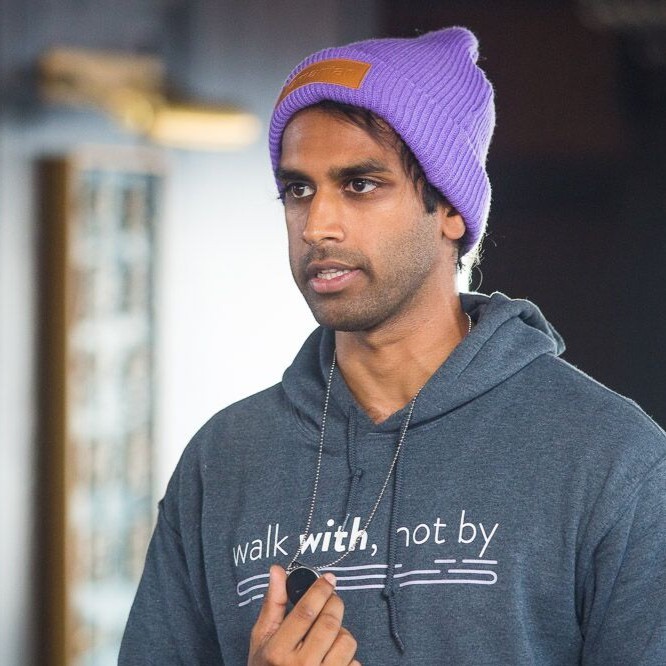
Samaritan was founded in 2016 by Jonathan Kumar and Chris Sun.

Investors · 5


How we know: First Trust Capital Partners's portfolio page · Not right? Tell us

How we know: the Techstars portfolio · open dataset · Top 3000 Accelerator Startups (no YC) 2026-08 · Not right? Tell us
Company profile
researched Sep 2026Samaritan is a Seattle-based technology company that combines a mobile app, an online donor community and financial technology to help people experiencing homelessness meet housing, health care and other immediate needs. Participants, known as Samaritan Members or beacon holders, are enrolled through certified nonprofits, medical clinics and other care providers such as the Salvation Army and Mary's Place. Each participant receives a Bluetooth device called a beacon, also described as a smart wallet, which can store critical documents such as work permits, licenses and Social Security cards, and which carries a public-facing profile containing the person's first name and last initial, an optional photo, their story and their goals.
App users, called "samaritans," receive a notification when they come within roughly 20 yards of a beacon holder and can view the profile, give cashless donations, send written messages of encouragement, offer introductions or hire the person for work such as art or music. Profiles can also be browsed in the app without a physical encounter. Donated funds are redeemable at partner locations including supermarkets, second-hand clothing stores, coffee shops and clinics, or can be released at the discretion of a partner nonprofit representative or Samaritan staff. A general fund distributes donations across participants according to the goals they complete and actions they take. To keep a beacon active beyond 30 days, the holder must complete a life-care visit with a partner counselor, during which goals, progress and needs for the coming month are recorded in the app; partner organizations handle referrals to employment, treatment and housing resources. Members earn incentive payments of up to $20 for tasks such as scheduling a meeting with a care navigator or visiting a primary care provider.
Founding story
Founder Jonathan Kumar, then working at a technology startup, was prompted to act after watching a man in Seattle in November 2015 spend twenty minutes asking passersby for help with diabetes medication without anyone stopping; Kumar concluded the man was experiencing relational as well as financial poverty. By September 2016 the Samaritan app was in motion and the first beacon, or smart wallet, was issued to a person in need. Kumar, born to immigrant parents in poverty, studied informatics with a specialization in UX design at the University of Michigan, produced a documentary on social change and previously built FoodCircles, a tool for restaurants to convert surplus food into funding for local food banks.
Business model
Samaritan distributes beacons through nonprofit and clinical partners at no cost to the individual, while donations from app users and a general fund flow to participants as goal-linked incentives redeemable with partner merchants and service providers. The company originally expected city government to be its primary funding source and subsequently shifted toward health care organizations for research funding and revenue, positioning its platform around the cost that homelessness imposes on hospitals and public health systems.
Traction
The company's initial Seattle pilot distributed 500 beacons and its website reported 50 positive outcomes as of 2019. By 2019 press coverage, more than 10,000 app users had participated in the Seattle area, donors had invested about $100,000 in beacon holders and more than 1,000 notes of encouragement had been sent; the company reported that seven out of ten people approached opted to try the program. The company's site later reported 15,210 volunteer samaritans signed up, $178,812 invested into Samaritan Members and 302 members who reached housing, employment or other goals.
Latest developments
In April 2022 the California Health Care Foundation's Innovation Fund awarded Samaritan $200,000, citing the expansion of Medi-Cal into housing and case management services and Samaritan's partnership with a Southern California safety-net hospital and community health center network serving frequent emergency department users.
▸Full profile — market position, technology, go-to-market, geography, history, risks & controversies
Market position
Samaritan operates at the intersection of homelessness services and health care engagement, an area of growing payer interest as California's Medi-Cal program expanded its involvement with housing and case management services for people with complex physical or behavioral health needs and more than 150,000 people experience homelessness in California. Health care organizations have turned to Samaritan to encourage unhoused people to engage with case management and medical care.
Technology
A smartphone application paired with a Bluetooth low-energy beacon, also marketed as a smart wallet, that broadcasts a participant's profile to nearby app users and stores identity and employment documents. The platform includes cashless donation and stored-value functionality restricted to approved partner merchants, in-app messaging between donors and participants, and a structured life-care check-in workflow in which counselors record monthly progress, goals and needs.
Go-to-market
Participants are signed up through care providers and certified nonprofits and clinics rather than directly; the company recruits partner organizations and, separately, consumer donors in the cities where it operates. It has pursued grant funding, pitch competitions and partnerships with safety-net providers to expand.
People experiencing homelessness enrolled through care providers; nonprofit and faith-based service organizations, community health centers and hospitals that enroll and case-manage them; and individual donors, local businesses and religious organizations who support participants through the app.
Geography
Headquartered in Seattle, where its first pilots ran; expansion plans have included Los Angeles, and the company has partnered with a safety-net hospital and a network of community health centers in Southern California to engage frequent emergency room users.
History
The app went into motion by September 2016 with the first beacon issued in Seattle that year, following a 2015 encounter that prompted founder Jonathan Kumar to start the project. An initial 500-beacon Seattle pilot produced 50 reported positive outcomes. In November 2019 Samaritan won first prize at the TRAILS pitching contest run by Cambia Grove, and in April 2022 it received a $200,000 award from the California Health Care Foundation Innovation Fund.
Risks & controversies
Samaritan encountered setbacks in securing funding for a second Seattle pilot and pivoted away from its original assumption that city government would be its primary funding source. As of late 2019 the company was seeking harder outcome data on its platform and had an outstanding application for a $1.5 million National Institutes of Health commercialization pilot grant with an undetermined result.
Compiled by commissioned research from 8 cited public sources — announcements, filings, and press listed under research sources below.
Key figures
latest reportedCompany-reported or press-reported figures, each dated to when it was claimed — not independently audited.
Timeline · 4
launches, deals, and filingsThe California Health Care Foundation Innovation Fund awarded Samaritan $200,000 to support its work empowering people experiencing homelessness to gain social and financial support.
$200K source ↗
Samaritan partnered with a safety-net hospital and a network of community health centers in Southern California to engage people who frequent emergency rooms, many of whom are experiencing homelessness.
Samaritan took first prize at the TRAILS (Traction and Implementation Lead to Solutions) pitching contest held by Cambia Grove at the World Congress Reducing Physician Burnout Summit in Arlington, Virginia. First prize was $25,000 toward an evidence-based research study at the Primary Care Innovation Lab at the University of Washington.
$25K source ↗
By September 2016 the Samaritan app was in motion and the first smart wallet, or beacon, was given to a person in need in Seattle.
Dated company events from announcements, filings, and press; legal rows summarize public dockets and regulator releases.
▸Research sources · 8
primary sources listed
- Samaritans - Wikipediaen.wikipedia.org · web
8 public sources were cited for this profile; the first-party ones are listed here.
Frequently asked questions
- What does Samaritan do?
- Seattle startup whose app, smart wallet and donor community give people experiencing homelessness financial and social support.
- Who founded Samaritan?
- Samaritan was founded by Jonathan Kumar, Chris Sun in 2016.
- Who are Samaritan's investors?
- Samaritan's investors include Acumen America, Eagle Venture, First Trust Capital Partners, Stand Together Ventures Lab, Techstars.
- Where is Samaritan headquartered?
- Samaritan is headquartered in Seattle, US.