 Fundraising Fox
Peripheral Labs
Entrepreneur First '24San Francisco, US · Founded 2024 · 8 known investors
Find your way into Peripheral Labs
Sign up to see every warm intro you have to Peripheral Labs
- Paths you didn't know you had: your email and LinkedIn already hold routes to the Peripheral Labs team. We find them for you
- 2nd- and 3rd-degree connections: the friend-of-a-friend routes that take hours to manually find through your inbox or LinkedIn
- Answers now, not in days: momentum is everything in a raise. Skip asking around whether someone knows someone
Days of research, done the moment you sign in, with every route ranked by how warm it is.
Peripheral Labs applies neural rendering to convert conventional broadcast camera footage into three-dimensional volumetric video. Its customers are broadcasters and streaming services, which can use the output for multi-angle replays and interactive viewing features without installing specialised volumetric capture rigs.
Also known as Peripheral · Peripheral Labs
Founders & leadership
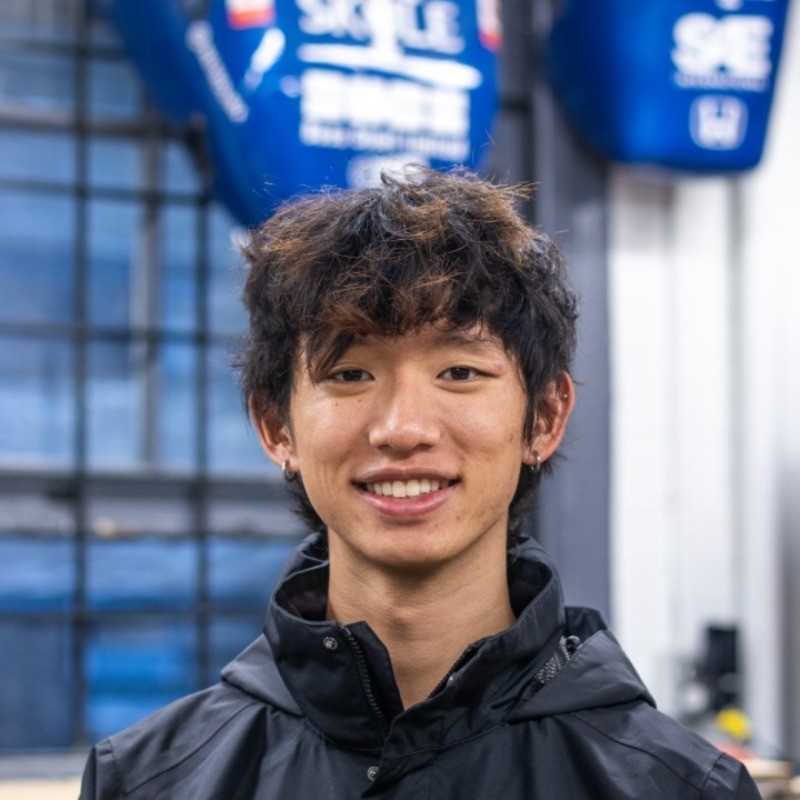
Peripheral Labs was founded in 2024 by Kelvin Cui and Mustafa Khan.

Investors · 8

How we know: the Entrepreneur First portfolio · open dataset · 5k.vc investor directory · Not right? Tell us

How we know: Transpose Platform Management's portfolio page · funding news · research · sportsbusinessjournal.com · Not right? Tell us

How we know: funding news · research · sportsbusinessjournal.com · Not right? Tell us

How we know: funding news · research · sportsbusinessjournal.com · Not right? Tell us

How we know: funding news · research · sportsbusinessjournal.com · Not right? Tell us
Also in the syndicate · 3
Funding
SEC filings, press & company announcements$3.6M disclosed across 1 of 5 rounds · 2025–2026
Source: company announcements and press reports — follow each round's link for the claim.
Company profile
researched Aug 2026Peripheral Labs (also referred to simply as Peripheral) develops neural rendering and spatial intelligence software that converts footage from conventional, sensor-equipped multi-camera setups into photorealistic, fully navigable three-dimensional reconstructions of live sports action. The core system is described as a large reconstruction model (LRM) that takes two-dimensional camera images and produces 3D video in near real time, allowing viewers to move a virtual camera to any angle, freeze a moment and swivel around players, or lock onto and follow a single athlete.
Beyond fan-facing replays, the platform outputs biomechanical and player-tracking data. The founders cite interactive replays, assistance with referee reviews, and analysis of athletes' biomechanics for performance improvement and injury-risk mitigation as the primary near-term use cases. The software can observe individual joints — including finger movements — and measure flexion of knees and ankles, information intended for coaching staff. The company has stated intentions to extend the system to live content production and, eventually, adjacent entertainment categories such as concerts and fashion shows.
The technical approach is derived from robotics perception and autonomous-vehicle 3D vision. The company works with off-the-shelf cameras combined with its own sensor stack, and states that its method reduces the number of cameras required relative to legacy volumetric capture: TechCrunch reported a reduction from over 100 cameras to as few as 32, while a later account described basketball and hockey arena installations as requiring at least 36 cameras, with further reduction a stated engineering priority.
Founding story
Peripheral Labs was founded in 2024 by Kelvin Cui (CEO) and Mustafa Khan (CTO), former classmates and robotics graduates of the University of Toronto who built self-driving cars, planes and race cars together on the university's autonomous racing and Formula Racing teams. Khan previously worked as a researcher at Huawei and Cui worked on chassis systems as a software engineer at Tesla. Both are sports fans, and Cui has said the concept originated when Khan showed him his 3D reconstruction research and Cui imagined watching hockey in a free-flowing, multi-angle way; the founders framed the aim as narrowing the gap between broadcast media and the interactive experience of video games.
Business model
Peripheral supplies a hardware-plus-software platform to sports organizations, aiming to keep hardware cost minimal for teams and broadcasters while signing multi-year contracts for its platform. Deployments range from proofs-of-concept to temporary and permanent arena installations. The company also plans a consumer-facing, browser-based replay product.
The founders have described selling the platform to teams and broadcasters under multi-year contracts, with hardware costs kept as low as possible; a browser-based consumer replay product is planned. No revenue figures are disclosed in the sources.
Traction
As of December 2025 the company had a staff of 10 and said it was in conversations with multiple North American leagues and teams on projects ranging from proofs-of-concept to permanent or temporary installations, without naming partners. In 2026 it was selected for the NBA Launchpad cohort and demonstrated its technology to NBA and WNBA officials at Summer League; Toronto Raptors social media posts featuring the technology reportedly drew millions of views. It also established a biomechanics basketball shooting lab in Toronto with QSLA. Total disclosed funding stands at $12.5M.
Latest developments
On August 17, 2026, Peripheral announced $8.7M in new seed funding co-led by Inovia Capital and Deloitte Ventures with follow-on participation from Khosla Ventures and Entrepreneurs First, bringing total funding to $12.5M. The round followed its NBA Launchpad demonstration at the 2026 NBA Summer League. Proceeds are earmarked for expanding the engineering team and accelerating deployments with leagues and stadiums, and the company said it would debut its first consumer-facing product, a browser-based replay system, later in the year.
▸Full profile — market position, technology, go-to-market, geography, history, risks & controversies
Market position
Peripheral positions itself as making volumetric video affordable and practical enough for broader adoption by leagues, teams, broadcasters and rights holders, in contrast to legacy volumetric capture systems requiring dense camera arrays. TechCrunch identifies Arcturus Studios as a competing startup in volumetric capture for sports. Investors frame the company as both a sports and an entertainment play, with Entrepreneurs First partner Joe Ros arguing that its sports deployments build a data, technology and deployment moat, and Inovia partner Karamdeep Nijjar describing real-time volumetric video plus biomechanics at scale as something no one else has cracked.
The company attributes its edge to applying autonomous-vehicle robotics and machine learning experience to neural rendering, allowing it to use off-the-shelf cameras with its own sensor packaging, sharply reduce the number of cameras needed, and scale from small practice enclosures to large soccer and football stadiums. It also claims real-time performance and combined volumetric video plus biomechanics output from a single platform, and states install cost reductions exceeding 90 percent relative to legacy volumetric capture.
Technology
The system applies robotics perception and 3D vision techniques from autonomous driving to sports video. A large reconstruction model performs neural rendering — described by the CTO as taking sensor inputs and learning a photorealistic 3D representation of the world — converting standard multi-camera feeds into navigable 3D scenes in near real time. It uses off-the-shelf cameras combined with the company's own depth-capturing sensor stack, similar in concept to self-driving car sensors. Reported camera requirements range from as few as 32 up to at least 36 for basketball and hockey arena installations, against over 100 for prior approaches; the company says the approach cuts install costs by more than 90 percent versus legacy volumetric capture. Additional engineering priorities include reducing latency and increasing reconstruction resolution.
Go-to-market
The company sells directly to North American leagues and teams, working through proofs-of-concept and evaluations of temporary or permanent installations, and has used accelerator-style validation channels such as the NBA Launchpad program and grassroots partnerships (QSLA) to demonstrate its technology. Social distribution via team accounts, such as Toronto Raptors clips, has provided public exposure. A browser-based consumer replay product is planned as a direct-to-fan channel.
Sports leagues, teams, stadiums, broadcasters, rights holders and media companies, plus coaching and athlete-development programs; the ultimate audience is sports fans, with an explicit focus on younger viewers who grew up with video games such as NBA 2K, NHL and FIFA.
Geography
Headquartered in Toronto, Canada, after relocating from San Francisco in 2025; commercial activity is focused on North American leagues, teams and stadiums. Investors are based in Toronto, Montreal and the United States.
History
The company was founded in 2024 and relocated from San Francisco to Toronto in 2025. In May 2025 it announced a partnership with the Quantum Sports and Learning Association to build what it describes as North America's first biomechanics basketball shooting lab in Toronto. It emerged from stealth in December 2025 alongside a $3.6M seed round led by Khosla Ventures (dated by one source to May 2025). In 2026 it joined the NBA Launchpad cohort and demonstrated its system to NBA and WNBA officials at Summer League, and on August 17, 2026 announced an additional $8.7M seed round co-led by Deloitte Ventures and Inovia Capital, bringing total disclosed funding to $12.5M.
Risks & controversies
Sources note that live sports viewing has declined for some sports, particularly among Gen Z, which is the demand backdrop the company targets, and that investors are often hesitant to back sports-related startups. The company has not publicly named any league or team customers, describing engagements as conversations, proofs-of-concept and evaluations. Camera-count requirements and install complexity remain an acknowledged constraint the team is working to reduce, along with system latency and reconstruction resolution. Reported figures are inconsistent in places: camera minimums are cited as 32 in one source and at least 36 in another, and the initial seed round is dated to December 2025 by most sources but to May 2025 by one.
Compiled by commissioned research from 8 cited public sources — announcements, filings, and press listed under research sources below.
Key figures
latest reportedCompany-reported or press-reported figures, each dated to when it was claimed — not independently audited.
Timeline · 5
launches, deals, and filingsPeripheral raised an additional $8.7M (about C$12.1M) in seed funding co-led by Deloitte Ventures and Inovia Capital with follow-on participation from Khosla Ventures and Entrepreneurs First, bringing total funding to $12.5M. Funds are directed at expanding the engineering team and accelerating deployments with leagues and stadiums.
$8.7M source ↗
Peripheral was named to the 2026 cohort of NBA Launchpad and demonstrated its technology to NBA and WNBA officials during Summer League. Toronto Raptors social accounts published clips made with the technology that the company says drew millions of views.
Peripheral Labs came out of stealth announcing a $3.6M seed round led by Khosla Ventures, with participation from Daybreak Capital, Entrepreneurs First, Transpose Platform and angel investors. Proceeds were earmarked for R&D, engineering hires and hardware/platform development. One later account dates this initial seed round to May 2025.
$3.6M source ↗
Peripheral partnered with QSLA, a feeder program into professional leagues, to build what the parties describe as North America's first biomechanics basketball shooting lab, located in Toronto.
The company moved its operations from San Francisco to Toronto in 2025.
Dated company events from announcements, filings, and press; legal rows summarize public dockets and regulator releases.
In the news
▸Research sources · 8
primary sources listed
- Peripheral Labs raises $3.6M, eyes sports use for volumetric video techsportsbusinessjournal.com · web
8 public sources were cited for this profile; the first-party ones are listed here.
Frequently asked questions
- What does Peripheral Labs do?
- Toronto AI startup turning standard multi-camera sports feeds into navigable, photorealistic 3D volumetric video.
- Who founded Peripheral Labs?
- Peripheral Labs was founded by Kelvin Cui, Mustafa Khan in 2024.
- Who are Peripheral Labs's investors?
- Peripheral Labs's investors include Entrepreneur First, Transpose Platform Management, Deloitte Ventures, Inovia Capital, Khosla Ventures.
- How much funding has Peripheral Labs raised?
- Peripheral Labs has disclosed $3.6M raised across 1 of its 5 known rounds.
- Where is Peripheral Labs headquartered?
- Peripheral Labs is headquartered in San Francisco, US.