 Fundraising Fox
Path Robotics
Columbus, US · Founded 2018 · Delaware corporation · 260 employees on LinkedIn · 18 known investors
Find your way into Path Robotics
Sign up to see every warm intro you have to Path Robotics
- Paths you didn't know you had: your email and LinkedIn already hold routes to the Path Robotics team. We find them for you
- 2nd- and 3rd-degree connections: the friend-of-a-friend routes that take hours to manually find through your inbox or LinkedIn
- Answers now, not in days: momentum is everything in a raise. Skip asking around whether someone knows someone
Days of research, done the moment you sign in, with every route ranked by how warm it is.
Path Robotics develops AI-powered robotic welding systems that adapt in real-time to part variations, serving manufacturers in heavy industry, critical infrastructure, defense, and energy sectors.
Also known as Path
Founders & leadership
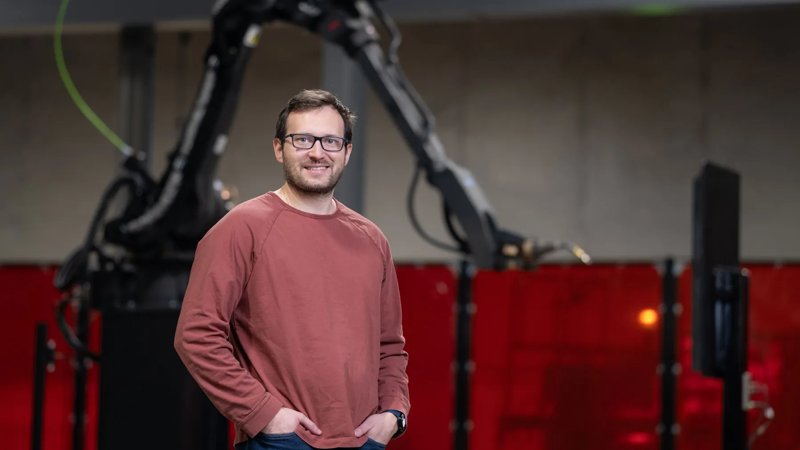
Path Robotics was founded in 2018 by Andy Lonsberry and Alex Lonsberry.
Board

Investors · 18

How we know: Asahi Kasei Corporate Venture Capital's portfolio page · open dataset · 5k.vc investor directory · Not right? Tell us
How we know: Catapult Ventures's portfolio page · therobotreport.com · the VCSheet dataset · Not right? Tell us

How we know: Drive Capital's portfolio page · a partner's Signal profile · funding news · press coverage · research · dispatch.com · Not right? Tell us
__Twitter.png)
How we know: therobotreport.com · gaingels.com · Not right? Tell us

How we know: the VCSheet dataset · manaventures.vc · Not right? Tell us

How we know: Matter Venture Partners's portfolio page · funding news · ohiotechnews.com · Not right? Tell us
How we know: Presidio Ventures's portfolio page · Not right? Tell us
How we know: Taiwania Capital's portfolio page · therobotreport.com · Not right? Tell us

How we know: Xplorer Capital's portfolio page · Not right? Tell us

How we know: Yamaha Motor Ventures's portfolio page · the VCSheet dataset · Not right? Tell us

How we know: press coverage · research · dispatch.com · Not right? Tell us

How we know: therobotreport.com · the VCSheet dataset · open dataset · 5k.vc investor directory · Not right? Tell us

How we know: the VCSheet dataset · Not right? Tell us
How we know: therobotreport.com · Not right? Tell us

How we know: funding news · therobotreport.com · Not right? Tell us
Also in the syndicate · 2
Funding
SEC filings, press & company announcements$146M disclosed across 2 of 7 rounds · 2021–2024
- Undisclosed amountSeries DOct 2024
Drive Capital (lead), Matter Venture Partners (lead)
Source ↗
▶$46MraisedNov 2021 · 11 investors · Other TechnologyRule 506(b)
- Andrew LonsberryExecutive Officer, Director
- Nick SolaroDirector
- Alexander LonsberryDirector
- Offering amount
- $56M
- Amount sold
- $46M
- First sale
- Jan 2021
- Incorporated
- Corporation, Delaware, 2018
- Federal exemptions
- 06b
▶$100MraisedNov 2021 · 5 investors · Other TechnologyRule 506(b)
- Alexander LonsberryDirector
- Nick SolaroDirector
- Andrew LonsberryExecutive Officer, Director
- Offering amount
- $100M
- Amount sold
- $100M
- First sale
- May 2021
- Incorporated
- Corporation, Delaware, 2018
- Federal exemptions
- 06b
Source: SEC EDGAR Form D. Amounts as filed; amended filings shown once at their latest values.
Company profile
researched Aug 2026Path Robotics is a Columbus, Ohio-based robotics company that develops autonomous welding systems for manufacturers. Its systems are built around Obsidian, which the company describes as a purpose-built foundational AI model for welding trained on tens of millions of welded inches. The company positions the technology as "physical AI": robots that use real-time, vision-driven seam finding and path planning to locate what needs to be welded, adapt to imperfect fit-up and part-to-part variation, and improve from each weld without requiring programming.
The product is delivered as intelligent welding cells that include capabilities such as multi-pass adaptive fill (using scans to determine the number and placement of weld passes needed to fill a joint), automatic heat-distortion compensation, full pole welding, and adaptive fixturing for quick changeover. Positioners supplied by ALM are used to hold large workpieces, from utility poles to ship hulls. The company also references mobile welding alongside fixed cells. Claimed performance figures on the company site include up to 17x faster than manual welding, 4x productivity, 30%+ lower cost, and 97%+ first-pass yield, with 24/7 "mission control" support.
Path frames its market around a skilled-welder shortage, citing a projected shortage of roughly 600,000 welders in the United States by 2030, an average welder age of 55, 43% of welders retiring within ten years, 30% annual turnover, and 10-12% manual arc-on time. Earlier coverage cited an American Welding Society projection of a 400,000-welder shortage by 2024.
Founding story
Andy and Alex Lonsberry grew up in Ohio welding with their father in a garage and came from an entrepreneurial family that ran a custom motorcycle business. While earning PhDs in AI-related fields at Case Western Reserve University, they decided they wanted to apply intelligence to physical work rather than build screen-based software, and founded Path Robotics after identifying welding labor shortages as the problem to solve. Andy Lonsberry serves as CEO and Alex Lonsberry as CTO.
Business model
Path sells its welding automation as robots-as-a-service, marketed with $0 capital expenditure for the customer, no risk of obsolescence, and 24/7 mission control support. Value is framed around throughput and yield gains (4x productivity, 30%+ lower cost, 97%+ first-pass yield) rather than equipment purchase.
Robots-as-a-service: customers pay for welding capacity rather than purchasing equipment, with the company stating $0 capex and including 24/7 support; the site does not disclose pricing.
Traction
As of May 2021 the company employed more than 100 people, planned to reach 160 by year end, had raised more than $70 million, said hundreds of U.S. parties were interested in purchasing its system, and was expanding its Columbus facility to more than 60,000 square feet. The company's site dates a $600 million agreement with HII to expand shipbuilding capacity to August 6, 2026, and references work with Saronic and LAD.
Latest developments
The company's homepage announces a $600 million deal signed with HII to expand shipbuilding capacity and accelerate deployment of physical AI across U.S. Navy shipbuilding, dated August 6, 2026, alongside a collaboration with Saronic exploring physical AI and automation in its shipbuilding environments.
▸Full profile — market position, technology, go-to-market, geography, history, risks & controversies
Market position
Path markets itself as a physical-AI company for manufacturing and, in 2021 press coverage, claimed the "world's first truly autonomous robotic welding system." Its board includes executives from Rocket Lab and Yale University and partners from Drive Capital and Matter Venture Partners. Stated collaborations and customers span shipbuilding (HII, Saronic, LAD) and general fabrication.
Path emphasizes autonomy without programming or perfect part fit-up, contrasted with traditional fixed automation, plus a welding-specific foundational model, handling of very large structures via ALM positioners, and a zero-capex service model that removes obsolescence risk for buyers.
Technology
Obsidian is Path's foundational AI model for welding, described as trained on tens of millions of welded inches. Combining machine learning and computer vision, it performs real-time seam finding and path planning, adapts to imperfect fit-up and part-to-part variation, determines multi-pass fill strategies from detailed scans, and compensates automatically for heat distortion. The company states the systems require no programming and learn from every weld.
Go-to-market
Direct sales supported by live and on-site demonstrations booked through the company website, plus published customer testimonials and industry-specific landing pages. The robots-as-a-service, zero-capex structure is used to reduce customer adoption risk. Large strategic agreements with defense primes and shipbuilders, such as the announced HII deal, form another channel.
Manufacturers in four stated industry groups: defense (ship, tank and submarine hulls, armored panels, vehicle frames, weapon mounts, naval components, aircraft structures, missile systems), utility and energy (utility and traffic poles, substations, battery storage), data centers (structural frames, e-houses, cooling units, server racks), and heavy industry/heavy equipment (mining equipment, heavy trailers and chassis, excavator and loader arms, industrial buckets, chassis frames, boom assemblies, hydraulic tanks).
Geography
Headquarters in Columbus, Ohio; originally founded in Cleveland. The about page lists investor locations in Columbus OH, San Francisco CA, Palo Alto CA, and New York NY. The company describes scaling operations worldwide and focuses commercially on U.S. manufacturing and defense industrial base customers.
History
The company was conceived by brothers Andy and Alex Lonsberry while they were pursuing doctorates at Case Western Reserve University, where they spent two years searching for an industrial problem to apply their machine learning skills to; that search led them to a manufacturer struggling to fill welding roles. The system was developed over roughly 18 months in the basement of a foundry. Originally based in Cleveland, the company relocated to Columbus to be closer to investor Drive Capital and to the region's engineering talent pool. By May 2021 the company employed more than 100 people, aimed to reach 160 by year end, had raised more than $70 million, and was expanding its facility at Scioto Audubon Metro Park to more than 60,000 square feet. As of 2026 the company describes itself as having a broad leadership team and an outside board, and announced a $600 million agreement with HII covering U.S. Navy shipbuilding.
Risks & controversies
Performance figures such as 4x productivity, 30% lower cost, 17x speed versus manual welding, and 97%+ first-pass yield are company-published and asterisked on the site rather than independently verified. Sources do not address litigation or regulatory matters.
Compiled by commissioned research from 8 cited public sources — announcements, filings, and press listed under research sources below.
Key figures
latest reportedCompany-reported or press-reported figures, each dated to when it was claimed — not independently audited.
Related companies · 3


Companies working in the same space as Path Robotics.
Timeline · 5
launches, deals, and filingsPath Robotics announced a $600 million deal with HII to accelerate the deployment of physical AI across U.S. Navy shipbuilding.
$600M source ↗
Saronic states it is exploring how Path's physical AI and automation can be applied within its shipbuilding environments and scaled for production.
The company said it would expand its Scioto Audubon Metro Park facility to more than 60,000 square feet to grow manufacturing capacity.
Path Robotics moved from Cleveland to Columbus to be closer to investor Drive Capital and regional engineering talent.
Path Robotics raised $56 million in Series B funding led by New York-based Addition, with participation from Drive Capital.
$56M source ↗
Dated company events from announcements, filings, and press; legal rows summarize public dockets and regulator releases.
Legal entities · 1
corporate structureIn the news
▸Research sources · 8
primary sources listed
- Path Roboticspath-robotics.com · web
8 public sources were cited for this profile; the first-party ones are listed here.
Frequently asked questions
- What does Path Robotics do?
- Path Robotics builds AI-driven autonomous welding cells that adapt in real time to part-to-part variation.
- Who founded Path Robotics?
- Path Robotics was founded by Andy Lonsberry, Alex Lonsberry in 2018.
- Who are Path Robotics's investors?
- Path Robotics's investors include Asahi Kasei Corporate Venture Capital, Catapult Ventures, Crosscourt Ventures, Drive Capital, Gaingels, Mana Ventures, Matter Venture Partners, Presidio Ventures and 8 more.
- How much funding has Path Robotics raised?
- Path Robotics has disclosed $146M raised across 2 of its 7 known rounds.
- Where is Path Robotics headquartered?
- Path Robotics is headquartered in Columbus, US.