 Fundraising Fox
OpenBCI
Brooklyn, US · Delaware corporation · 2 known investors
Find your way into OpenBCI
Sign up to see every warm intro you have to OpenBCI
- Paths you didn't know you had: your email and LinkedIn already hold routes to the OpenBCI team. We find them
- 2nd- and 3rd-degree connections: the friend-of-a-friend routes you can't see from your own inbox or LinkedIn
- Answers now, not in days: momentum is everything in a raise. Skip asking around whether someone knows someone
Days of research, done the moment you sign in, with every route ranked by how warm it is.
Brooklyn-based maker of open-source brain-computer interface hardware for EEG, EMG and EKG biosensing.
Also known as OpenBCI
Founders & leadership
Investors · 2


Reported raises · per SEC filings
Form D private placements$3.3M disclosed across 4 rounds · 2021–2024
▶$200KraisedSep 2024 · 4 investors · Other TechnologyRule 506(b)
- Conor RussomannoExecutive Officer, Director, Promoter
- Offering amount
- $1.9M
- Amount sold
- $200K
- Minimum investment
- $10K
- First sale
- Apr 2024
- Incorporated
- Corporation, Delaware
- Federal exemptions
- 06b
▶$110KraisedMar 2023 · 2 investors · Other TechnologyRule 506(b)
- Conor RussomannoExecutive Officer, Director, Promoter
- Offering amount
- $4M
- Amount sold
- $110K
- Minimum investment
- $10K
- First sale
- Feb 2023
- Incorporated
- Corporation, Delaware
- Federal exemptions
- 06b
▶$1.3MraisedJan 2022 · 6 investors · Other TechnologyRule 506(b)
- Conor RussomannoExecutive Officer, Director, Promoter
- Offering amount
- $1.5M
- Amount sold
- $1.3M
- Minimum investment
- $10K
- First sale
- Jan 2022
- Incorporated
- Corporation, Delaware
- Federal exemptions
- 06b
▶$1.8MraisedOct 2021 · 5 investors · Other TechnologyRule 506(b)
- Conor RussomannoExecutive Officer, Director, Promoter
- Offering amount
- $2.5M
- Amount sold
- $1.8M
- Minimum investment
- $10K
- First sale
- Sep 2021
- Incorporated
- Corporation, Delaware
- Federal exemptions
- 06b
Source: SEC EDGAR Form D. Amounts as filed; amended filings shown once at their latest values.
Company profile
researched Aug 2026OpenBCI is an open-source brain-computer interface platform and company headquartered in Brooklyn, New York, founded by Joel Murphy and Conor Russomanno after a Kickstarter campaign in late 2013. Its core products are low-cost biometric amplifier boards that measure and record electrical activity produced by the brain (EEG), muscles (EMG) and heart (EKG). The boards work with standard EEG electrodes and can be used with the open-source OpenBCI GUI software or integrated with other open-source EEG signal processing tools.
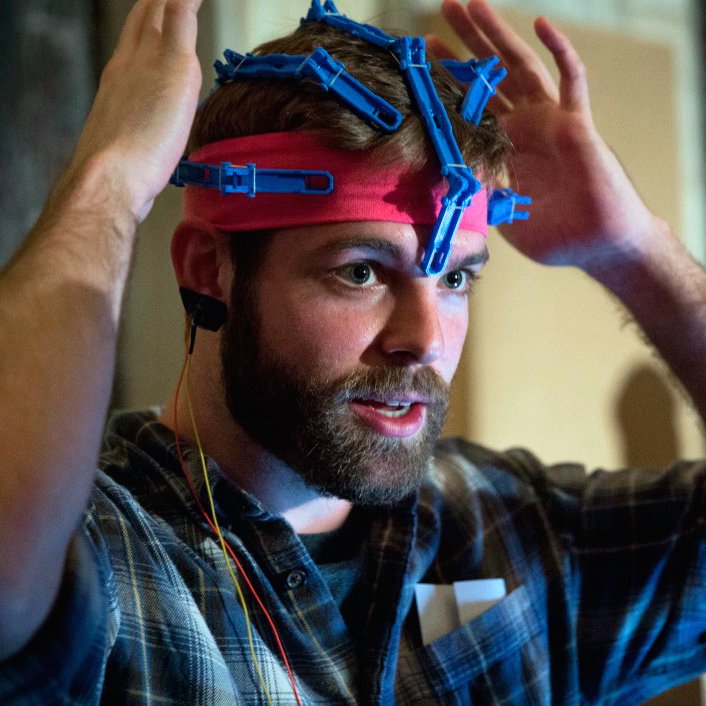
The hardware line includes a 32-bit board built around Texas Instruments' ADS1299 biopotential measurement IC with a PIC microcontroller (a deprecated 8-bit ATmega328P version preceded it), capable of writing EEG data to an SD card or transmitting it over Bluetooth, and the 4-channel Bluetooth-enabled Ganglion board announced in 2015. The company also offers the Ultracortex, a 3D-printed headset that holds electrodes in position according to the 10–20 system; its design files are published on GitHub and preprinted units are sold in the OpenBCI store. Software includes an open-source Processing-based application plus display and processing tools written in NodeJS and Python.
In late 2020 OpenBCI unveiled Galea, a combined hardware and software platform integrating EEG, EMG, EDA, PPG and eye-tracking into a single headset designed to merge biometrics with mixed reality, used mounted with headsets such as the Varjo XR-3. Galea Beta pre-order units began shipping in August 2024.
Founding story
The platform grew out of Conor Russomanno's study of brain-computer interfacing as a Design & Technology MFA student at Parsons School of Design. After graduating, he led two Kickstarter campaigns with Joel Murphy that raised close to $500,000, funding the development of OpenBCI.
Business model
OpenBCI develops and sells biosensing hardware — boards, electrodes and headsets — while releasing design files and software as open source. Boards and pre-printed Ultracortex headsets are sold through the company's online store, and headset design files are also available free from OpenBCI's GitHub account. Headsets are manufactured and produced by Voodoo Manufacturing. Early product development was financed through Kickstarter pre-order campaigns.
Sales of biosensing hardware — boards, headsets and related products — through the OpenBCI online store, including pre-orders for the Galea platform.
Traction
OpenBCI hardware has been used in published research studies and in applications including SSVEP-based control of a HexBug robot and drawing by locked-in graffiti artist Tempt One using OpenBCI with the Eyewriter eye-tracking system. The 2023 TED demonstration enabled Christian Bayerlein to fly a drone hands-free using EEG and EMG signals. Galea won two CES 2023 Innovation Awards, a Unity Aerospace & Defense award and an AWE Auggie Award, and began shipping Beta units in August 2024 with a stated lead time of two weeks.
▸Full profile — market position, technology, go-to-market, geography, history
Market position
OpenBCI is an established supplier of open-source, consumer- and research-grade biosensing hardware; its amplifiers have been compared with medical-grade equipment in published BCI research and validated in numerous research studies.
OpenBCI positions its boards as low-cost biometric amplifiers with openly published hardware design files and open-source software, compatible with standard EEG electrodes and other open-source EEG signal processing tools. Galea is described as the first device to integrate EEG, EMG, EDA, PPG and eye-tracking into a single headset.
Technology
OpenBCI boards use the Texas Instruments ADS1299 IC for biopotential measurement, with on-board processing by a PIC microcontroller on the 32-bit board (the deprecated 8-bit version used an Arduino-compatible ATmega328P). Data can be stored on an SD card or streamed over Bluetooth. Software includes an open-source Processing application plus NodeJS and Python display and processing tools. The Ultracortex 3D-printed headset positions electrodes per the 10–20 system. Galea combines EEG, EMG, EDA, PPG and eye-tracking sensors in a headset that mounts with mixed-reality HMDs such as the Varjo XR-3.
Go-to-market
Products are distributed directly through the OpenBCI online store and were initially launched via Kickstarter crowdfunding campaigns. Free distribution of headset design files and software on GitHub supports adoption among makers, researchers and developers, and the company has built visibility through conference talks, a 2023 TED main-stage presentation, CES and AWE awards, and media features including NPR's TED Radio Hour, CNN's Decoded series and a Lenovo customer success video.
Makers, biohackers, developers, accessibility and assistive-technology users, and academic and industrial researchers working on brain-computer interfaces, neuroscience and mixed-reality applications.
Geography
The company's headquarters is in Brooklyn, New York, United States.
History
OpenBCI was created by Joel Murphy and Conor Russomanno following a successful Kickstarter campaign in late 2013 for an open-source brain-computer interface aimed at makers. A second Kickstarter campaign in 2015 introduced the Ganglion board, and the two campaigns together raised close to $500,000. An 8-bit Arduino-compatible board was later deprecated in favor of a 32-bit PIC-based board. The Ultracortex 3D-printed headset progressed through several iterations to the current Mark IV. In late 2020 the company unveiled Galea, and after several years of development and manufacturing it began shipping Galea Beta pre-orders in August 2024. In April 2023 co-founder and CEO Conor Russomanno presented Galea and the Neurofly project on the TED main stage.
Compiled by commissioned research from 3 cited public sources — announcements, filings, and press listed under research sources below.
Key figures
latest reportedCompany-reported or press-reported figures, each dated to when it was claimed — not independently audited.
Related companies · 1

Companies working in the same space as OpenBCI.
Non-dilutive funding · 1 SBIR/STTR award
Federal grants — no equity taken| Agency | Phase | Year | Amount |
|---|---|---|---|
| U.S. Air ForceAir Force | Phase II | 2023 | $1.8M |
Source: SBIR.gov award data (U.S. Small Business Administration). SBIR/STTR awards are competitive federal R&D grants and contracts — non-dilutive capital alongside any venture rounds above.
Timeline · 6
launches, deals, and filingsAfter several years of development and manufacturing, OpenBCI began shipping Galea Beta unit pre-orders.
CEO and co-founder Conor Russomanno presented on the TED main stage with Christian Bayerlein, who used EEG and EMG signals via OpenBCI technology and a Varjo HMD to pilot a drone hands-free.
Galea received CES 2023 Innovation Awards in the Virtual & Augmented Reality and Wearable Technologies categories; it had previously won a Unity Aerospace & Defense award and an AWE Auggie Award for Best Interaction Product.
OpenBCI unveiled Galea, a hardware and software platform combining EEG, EMG, EDA, PPG and eye-tracking with mixed reality in a single headset.
OpenBCI announced the Ganglion board, a 4-channel Bluetooth-enabled board for EEG, EMG and EKG measurement, initially offered on Kickstarter at $99 and later listed at $249.99 and then $499.00.
Joel Murphy and Conor Russomanno ran a successful Kickstarter campaign in late 2013 for an open-source brain-computer interface for makers; together with a second campaign the two Kickstarters raised close to $500,000.
Dated company events from announcements, filings, and press; legal rows summarize public dockets and regulator releases.
▸Research sources · 3
primary sources listed
- Conor Russomanno - Wikipediaen.wikipedia.org · web
3 public sources were cited for this profile; the first-party ones are listed here.
Frequently asked questions
- What does OpenBCI do?
- Brooklyn-based maker of open-source brain-computer interface hardware for EEG, EMG and EKG biosensing.
- Who founded OpenBCI?
- OpenBCI was founded by Conor Russomanno.
- Who are OpenBCI's investors?
- OpenBCI's investors include Bitkraft Esports Ventures, Inertia Ventures.
- How much funding has OpenBCI raised?
- OpenBCI has disclosed $3.3M raised across 4 rounds.
- Where is OpenBCI headquartered?
- OpenBCI is headquartered in Brooklyn, US.