 Fundraising Fox

Kyber
Paris, FR · Founded 2025 · 3 known investors
Find your way into Kyber
Sign up to see every warm intro you have to Kyber
- Paths you didn't know you had: your email and LinkedIn already hold routes to the Kyber team. We find them for you
- 2nd- and 3rd-degree connections: the friend-of-a-friend routes that take hours to manually find through your inbox or LinkedIn
- Answers now, not in days: momentum is everything in a raise. Skip asking around whether someone knows someone
Days of research, done the moment you sign in, with every route ranked by how warm it is.
Kyber builds real-time control infrastructure that reduces network latency to single-digit milliseconds, enabling operators to remotely control robots, drones, and autonomous systems with minimal delay. The platform synchronizes video, audio, control inputs, and telemetry for applications ranging from surgical robotics to warehouse operations across multiple industries.
Also known as Kyber Media
Founders & leadership
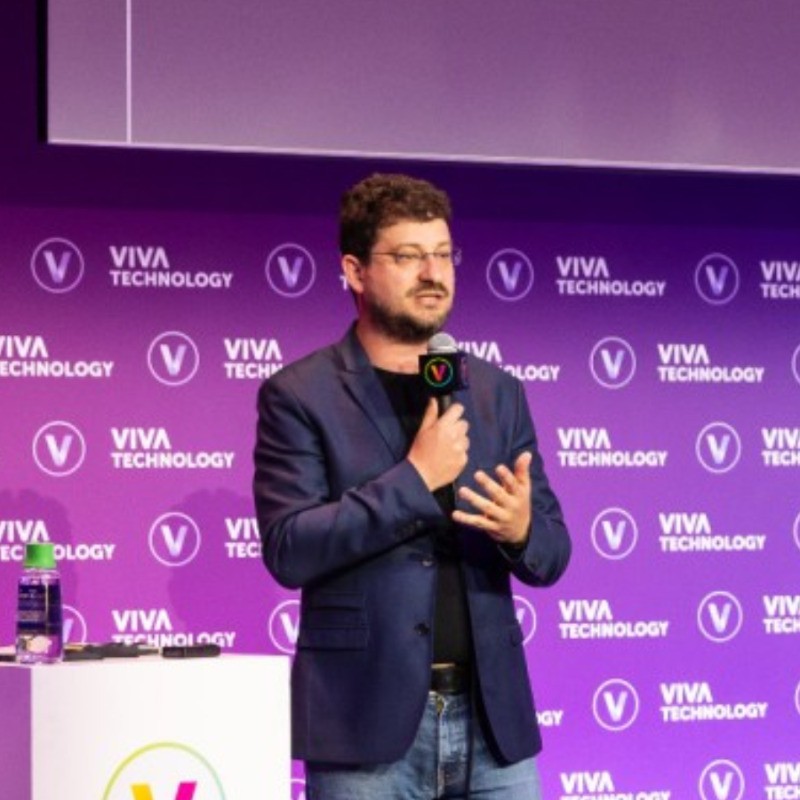
Kyber was founded in 2025 by Jean-Baptiste Kempf.
Investors · 3

How we know: Kima Ventures's portfolio page · the VCSheet dataset · Not right? Tell us

How we know: Lightspeed Venture Partners's portfolio page · funding news · press coverage · research · thesaasnews.com · Not right? Tell us

Funding
SEC filings, press & company announcements$10M disclosed across 2 of 3 rounds · 2026
- $5MSeedJun 2026
Lightspeed Venture Partners (lead)
Source ↗ - $5MraisedJun 2026 · 4 sourcesSource ↗
Source: company announcements and press reports — follow each round's link for the claim.
Company profile
researched Aug 2026Kyber is a Paris-headquartered infrastructure company building a protocol layer that connects human operators and AI agents to physical machines in real time. Its core software is an SDK that synchronizes video, audio, sensor data and control inputs with minimal latency across distributed locations, targeting cases where the operator, the compute and the physical action are in three different places. The company frames its work as the underlying layer for "physical AI," addressing latency, synchronization and observability for fleets ranging from a handful of devices to, in the company's stated ambition, millions.
The technical approach draws on video-streaming techniques combined with IoT optimization, tuning performance to the compute available on each device at scale. Beyond real-time control, the platform is positioned to support fleet observability and remote software updates without physically reaching each device. Kyber prioritizes three segments: robotics, drones of all types, and remote IT access, where it reports particularly strong demand and positions itself against incumbents such as Citrix. As of June 2026 the company said it was already in commercial deployment with customers in defense, telco, robotics and AI.
Founding story
Kyber was founded by Jean-Baptiste Kempf, the lead developer of VLC Media Player, an open source video player that has been downloaded more than 6 billion times. The project began as a side project Kempf built while he was CTO of the cloud gaming startup Shadow, growing out of his streaming and low-latency work. Kempf's thesis is that hundreds of millions of robots and drones will operate in public spaces within a few years and will need a shared real-time control layer. The name is a reference to the kyber crystals used in Star Wars lightsabers, chosen to signal the company's focus on speed, since "every millisecond matters" when controlling physical objects.
Business model
Kyber follows an open core model: the core project is open source and freely usable, while the company sells a productized version to enterprise customers. It also provides hands-on custom deployment via forward-deployed engineers (FDEs), an approach compared to Palantir's; FDEs make up a large share of its 25-person team. The company expects its open source user base to be far larger than its paying customer base.
Revenue comes from a commercial, productized enterprise edition of the open source core, supplemented by hands-on deployment work delivered by forward-deployed engineers.
Traction
As of June 2026 the company reported 25 full-time employees and existing commercial deployments with customers across defense, telco, robotics and AI, alongside a $5 million seed round led by Lightspeed Venture Partners.
Latest developments
In June 2026 Kyber announced a $5 million seed round led by Lightspeed Venture Partners, to be used to scale its productized enterprise offering and continue development of the protocol layer for real-time control of physical AI fleets.
▸Full profile — market position, technology, go-to-market, geography
Market position
Kyber positions itself as a generalized, shareable alternative to the bespoke real-time control stacks that well-resourced companies have built internally for uses such as remote driving, arguing those systems were built for fleets of only a few thousand vehicles rather than millions of devices. In remote IT access it is described as aiming beyond a Citrix challenger role.
A general-purpose, open source real-time control and synchronization layer intended to be reusable across industries, in contrast to closed, single-purpose systems built in-house by individual operators; combined video-streaming latency expertise and IoT device optimization; and delivery through forward-deployed engineers.
Technology
An SDK-based protocol layer that synchronizes video, audio, sensor data and control inputs with minimal latency across distributed sites. The design borrows from video-streaming technology for lag reduction and from IoT engineering for per-device performance optimization at scale, and extends to fleet observability and remote software deployment. The core codebase is open source.
Go-to-market
Open source distribution of the core project to build adoption, converted through a paid enterprise product, with forward-deployed engineers embedded for custom deployments. Offices in San Francisco and Singapore support an intended global enterprise client base.
Enterprises operating distributed physical devices, with prioritized segments in robotics, drones and remote IT access; disclosed deployment sectors include defense, telco, robotics and AI. Buyers are organizations whose operators, compute and physical assets are in different locations, including those managing large device or vehicle fleets.
Geography
Headquartered in Paris, France, with additional offices in San Francisco and Singapore.
Compiled by commissioned research from 5 cited public sources — announcements, filings, and press listed under research sources below.
Key figures
latest reportedCompany-reported or press-reported figures, each dated to when it was claimed — not independently audited.
Timeline · 1
launches, deals, and filingsKyber announced a $5 million seed round led by Lightspeed Venture Partners, to be used to scale its productized enterprise version and continue developing its protocol layer for real-time control of physical AI fleets.
$5M source ↗
Dated company events from announcements, filings, and press; legal rows summarize public dockets and regulator releases.
▸Research sources · 5
primary sources listed
- Kyber Raises $5M Seedthesaasnews.com · web
5 public sources were cited for this profile; the first-party ones are listed here.
Frequently asked questions
- What does Kyber do?
- Paris-based Kyber builds a low-latency infrastructure layer for real-time remote control of robots, drones and devices.
- Who founded Kyber?
- Kyber was founded by Jean-Baptiste Kempf in 2025.
- Who are Kyber's investors?
- Kyber's investors include Kima Ventures, Lightspeed Venture Partners, OVNI Capital.
- How much funding has Kyber raised?
- Kyber has disclosed $10M raised across 2 of its 3 known rounds.
- Where is Kyber headquartered?
- Kyber is headquartered in Paris, FR.