 Fundraising Fox
Invision AI
Techstars '16Toronto, CA · Founded 2017 · 13 employees on LinkedIn · 1 known investors
Find your way into Invision AI
Each arrow is one introduction. Sign up to fill in the first one.
Ask Séamus Hatch to introduce you to Karim Ali
You →Séamus · together at Invision AI →Karim
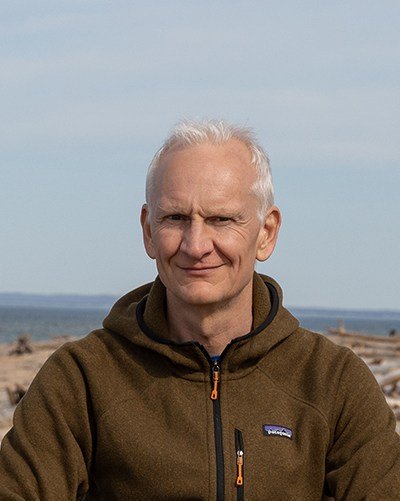
Sign up to find every way you can get introduced to Invision AI
- Your email: who you already know at Invision AI, and who your contacts know
- 2nd- and 3rd-degree connections: people you know who worked, studied or invested with the Invision AI team
- Your LinkedIn: the connections who can make the intro for you
We rank every route by how warm it is, so you raise on warm intros instead of cold emails.
Invision AI develops artificial intelligence software for 3-D image understanding and computer vision, serving smart infrastructure applications in mobility and transportation. The platform analyzes video from single or multiple cameras to enable safer, more efficient operations while preserving privacy.
Also known as Invision AI, Inc. · Invision AI, Ltd
Founders & leadership
Invision AI was founded in 2017 by Karim Ali.

Investors · 1

How we know: the Techstars portfolio · open dataset · Top 3000 Accelerator Startups (no YC) 2026-08 · Not right? Tell us
Company profile
researched Sep 2026Invision AI develops computer vision and artificial intelligence software for the transportation industry. Its platform derives real-time, geo-referenced 3-D information — position, size, speed, heading and acceleration of objects — from a single ordinary camera, and can link multiple cameras into a collaborative mesh that tracks objects from entry to exit across a site. Processing is distributed to edge devices, which the company states preserves privacy and reduces bandwidth costs, and the platform uses generative AI so that individual sensors can learn to detect anomalies and share those improvements with other sensors.
Three named products are offered: iVOD for vehicle occupancy detection (counting passengers in vehicles automatically in varying weather and at varying speeds), iAID for automatic incident detection (real-time geo-localized anomaly detection and alerting), and iFlow for origin-to-destination tracking and situational analysis of spaces using multiple collaborative cameras. Described deployments and use cases include rail station passenger flow, HOT and HOV lane occupancy enforcement including a France–Switzerland border crossing, adaptive highway lighting via incident detection, traffic counting and vehicle classification, and level-crossing safety and timing optimization.
Earlier coverage described the company as supplying edge-based AI software generating real-time insights from inputs such as object tracking and analytics, with smart office applications developed alongside a partnership with furniture manufacturer Steelcase.
Founding story
In 2014, Karim Ali was conducting post-doctoral research on applying neural networks to computer vision at UC Berkeley and Harvard. He concluded that restricting computer vision to single-camera 2-D analytics was a constraint on scalability, and Invision was subsequently founded to build image-understanding AI that provides 3-D awareness from a single camera and combines multiple cameras into a collaborative mesh.
Business model
Invision AI sells AI software that runs on edge devices with off-the-shelf cameras, so customers do not need to purchase specialized hardware or rely on cloud uploads. Products are packaged as named solutions (iVOD, iAID, iFlow) sold to infrastructure operators and agencies for occupancy detection, incident detection and flow tracking.
Revenue comes from supplying AI software products to enterprise and infrastructure customers; the company reported revenue of approximately $500,000 in 2018 and projected multi-million-dollar revenue thereafter.
Traction
Reported deployments include iFlow increasing passenger capacity at a railway station for a major operator by up to 27%, iVOD controlling HOV lane access at a France–Switzerland border crossing where violation rates fell from about 90% to nearly zero, and iAID enabling an adaptively lit highway of more than 200 km with 75% energy savings. Steelcase is described as a banner client. Revenue of roughly $500,000 was reported for 2018 with headcount growing from two to twelve.
Latest developments
A 2023 account documented the Steelcase partnership originating through MaRS and the resulting smart office offering becoming a pillar of the company's products and growth strategy. Patents on roadside vehicle occupancy detection and scene-aware object detection were granted between 2022 and 2023.
▸Full profile — market position, technology, go-to-market, geography, history
Market position
Positioned as a supplier of privacy-preserving, camera-based 3-D sensing for smart transport infrastructure, competing with LiDAR-based sensing approaches for detection, classification and tracking tasks. Third-party profiles categorize the company under artificial intelligence, machine learning, IoT and sensors, and mobility and transport.
Differentiators cited by the company include 3-D sensing from a single standard camera without a flat ground-plane assumption, multi-camera collaborative mesh tracking, 10 cm localization accuracy, edge processing for privacy and bandwidth, generative-AI-based anomaly learning shared between sensors, and a portfolio of over 16 patents.
Technology
The platform builds a camera-based, geo-referenced 3-D map of a site from a video walk-through or drive-through; any camera pointed at the site can then be calibrated automatically to sense in 3-D, extracting geo-positions, speeds, sizes and accelerations. Spatial reasoning over these measurements is used to validate detections (for example, whether a vehicle's orientation, acceleration and size are physically plausible for its location). Because each camera produces geo-referenced metadata, collaborative multi-camera detection and tracking is possible, and the system produces an animated 3D digital twin of occupancy and motion in the covered volume. The company states the approach works with any off-the-shelf camera and site, achieves 10 cm localization accuracy, and does not rely on a flat ground-plane assumption. More than 16 patents are stated to protect the core technologies; granted patents listed include "Road side vehicle occupancy detection system" and "Scene-aware object detection". The company contrasts cameras with LiDAR on spatial resolution, frame rate and texture perception.
Go-to-market
The company targets sector-leading customers and partners, and has used innovation-hub channels — notably MaRS Discovery District in Toronto and its AVIN transportation program — to source corporate partnerships such as Steelcase. It maintains customer-facing contact points in Canada, Switzerland and the United States.
Roadway and tolling agencies, highway operators, railway network and station operators, border crossing authorities, and enterprises requiring space analytics such as office furniture and workplace technology companies.
Geography
Headquarters in Toronto, Ontario, Canada (2 Carlton Street), with a Swiss presence in Renens (c/o Fondation Inartis) and a US entity in Shelby Township, Michigan. Deployments referenced include a France–Switzerland border crossing.
History
Founded in 2017 by Karim Ali, who serves as founder and CEO. The company worked with Toronto innovation hub MaRS Discovery District, including its AVIN transportation-technology program, and through MaRS was introduced to Steelcase, which became a client and led to smart office solutions becoming part of the product line. The company grew from two to twelve employees and reported revenue of roughly $500,000 in 2018. It has since focused on mobility and transport infrastructure applications, and maintains entities in Canada, Switzerland and the United States.
Compiled by commissioned research from 8 cited public sources — announcements, filings, and press listed under research sources below.
Key figures
latest reportedCompany-reported or press-reported figures, each dated to when it was claimed — not independently audited.
Related companies · 1

Companies working in the same space as Invision AI.
Timeline · 4
launches, deals, and filingsInvision AI was introduced to furniture and architectural technology company Steelcase through MaRS Discovery District, pitched Steelcase CEO James P. Keane at a MaRS innovation showcase, and ran projects applying its sensing technology to Steelcase test spaces. Steelcase is described as a banner client, and smart office solutions became a pillar of Invision AI's offerings.
Dated company events from announcements, filings, and press; legal rows summarize public dockets and regulator releases.
▸Research sources · 8
primary sources listed
- Invision AIinvision.ai · web
8 public sources were cited for this profile; the first-party ones are listed here.
Frequently asked questions
- What does Invision AI do?
- Invision AI builds patented computer-vision software that extracts 3-D insight from ordinary cameras for transport infrastructure.
- Who founded Invision AI?
- Invision AI was founded by Karim Ali in 2017.
- Who are Invision AI's investors?
- Invision AI's investors include Techstars.
- Where is Invision AI headquartered?
- Invision AI is headquartered in Toronto, CA.