 Fundraising Fox
Haladir
YC W26San Francisco, US · Founded 2025 · 4 employees · 13 known investors
Find your way into Haladir
Sign up to see every warm intro you have to Haladir
- Paths you didn't know you had: your email and LinkedIn already hold routes to the Haladir team. We find them for you
- 2nd- and 3rd-degree connections: the friend-of-a-friend routes that take hours to manually find through your inbox or LinkedIn
- Answers now, not in days: momentum is everything in a raise. Skip asking around whether someone knows someone
Days of research, done the moment you sign in, with every route ranked by how warm it is.
A data infrastructure platform that unifies operational data from systems like WMS, TMS, OMS, YMS, and ERP. It reconciles IDs, timestamps, and event semantics to create standardized objects for supply chain and logistics operations.
Also known as Haladir Inc.
Founders & leadership· Y Combinator alumni (W26)
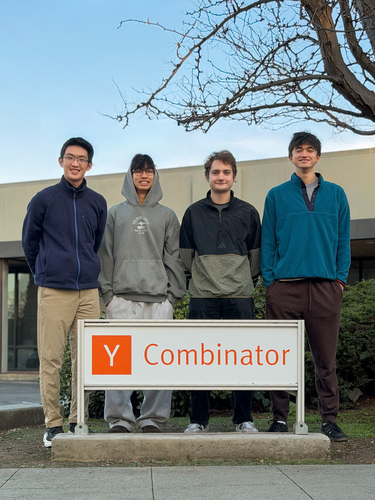
Haladir was founded in 2025 by Jibran Hutchins, Quan Huynh, Preston Schmittou, and Joseph Tso.




Investors · 13

How we know: Y Combinator's founder network · Not right? Tell us

How we know: haladir.com · research · haladir.com · Not right? Tell us

How we know: the Y Combinator directory · press coverage · research · caplight.com · open dataset · 5k.vc investor directory · Not right? Tell us

How we know: haladir.com · research · haladir.com · Y Combinator's founder network · Not right? Tell us

How we know: a partner's Signal profile · research · caplight.com · Not right? Tell us
How we know: Y Combinator's founder network · Not right? Tell us
How we know: Y Combinator's founder network · Not right? Tell us

How we know: haladir.com · research · haladir.com · Y Combinator's founder network · Not right? Tell us
How we know: press coverage · research · caplight.com · Not right? Tell us

How we know: haladir.com · Y Combinator's founder network · Not right? Tell us
Also in the syndicate · 3
Funding
SEC filings, press & company announcements- Undisclosed amountseed roundApr 2026
BoxGroup (lead), Susa Ventures (lead), Sunflower Capital, SV Angel, Valkyrie Ventures, XPRESS Ventures, Y Combinator
Source ↗
Source: company announcements and press reports — follow each round's link for the claim.
Company profile
researched Aug 2026Haladir is a San Francisco–based applied AI company, founded in 2025 and part of Y Combinator's Winter 2026 batch, that describes itself as a decisional AI layer for logistics and, in its launch materials, as an AI product lab combining formal solvers with large language models to make AI reliable for constrained systems. The core thesis stated by the company is that LLMs are effective as formalization tools — translating an operation's rules into precise constraints and proposing tunable parameters — while deterministic solvers (SMT/SAT, MILP, OR tools, forecasting and linear-programming models) perform the actual optimization. The company applies this to logistics, supply chain, critical software, and manufacturing, and positions the output as "operational superintelligence."
The product framework, called Nomos, is described in five stages. Stage 1, data infrastructure, unifies operational data across WMS, TMS, OMS, YMS, ERP and data lakehouses, reconciling IDs, timestamps and event semantics so that SKUs, orders, shipments, lanes, pallets and shifts become first-class objects in an operational graph. Stage 2, process intelligence, uses object-centric process mining on system events to reconstruct a live digital twin of the warehouse floor, lanes and labor schedule. Stage 3 combines ML predictions (demand, dwell, ETA, no-show risk) with constraint solvers to generate decisions for vehicle routing, pick-path optimization, wave release, dock-door assignment, slotting, labor allocation and inventory positioning. Stage 4 covers implementation channels: operator review for high-stakes decisions, direct write-back into WMS/TMS/YMS/OMS for well-constrained decisions, and AI agents for multi-system coordination. Stage 5 provides monitoring and observability, including decision traceability, recommended-versus-executed comparison, capture of operator overrides, and root-cause attribution across data drift, workflow drift, forecast error and solver infeasibility. The company also markets a Nomos Sandbox demo.
Alongside the logistics application layer, Haladir builds at the model training layer, supplying solver-based reinforcement-learning environments and data pipelines to frontier AI labs. A third-party profile characterizes this work as formally verified training data with machine-checkable contracts and weakest-precondition-driven specifications, verification-aware RL environments where rewards are tied to formal specification compliance, and model validation frameworks for AI-generated code.
Founding story
The founding team states that in high school they published work cited in IEEE and Elsevier Q1 journals in operations research and machine learning, and that they left Carnegie Mellon, Princeton and the University of Virginia to build Haladir. Listed founders are Jibran Hutchins (co-founder and CEO, Carnegie Mellon), Quan Huynh (co-founder, described elsewhere as CIO), Joseph Tso (co-founder, CS at Princeton) and Preston Schmittou (founder, UVA Wise).
Business model
B2B. The company sells to enterprises running logistics operations and, separately, supplies solver-based RL environments and training data pipelines to frontier AI labs. A third-party profile classifies the customer profile as subscription SaaS plus services and consulting, with the company positioned as an AI infrastructure layer. Deployments are described as scoped per customer, with integrations, unified schema, digital twin, models, solvers and decision classes tuned to each engagement.
Not specified in the sources beyond a third-party classification of B2B with a subscription SaaS plus services and consulting customer profile; per-customer scoped implementations are described, and the company also supplies data and RL environments to AI labs.
Traction
Team size of four listed by Y Combinator (a third-party profile lists an employee range of 5), with five open roles posted in San Francisco, including a founding operations research engineer at $150K–$220K. The company states it is working today with 3PLs, distributors and frontier AI labs, and that it is engaged with one of the leading AI labs on post-training. Total disclosed funding is $4.3M. No customer names, revenue or usage metrics are disclosed in the sources.
Latest developments
March 2026: public launch post and video positioning Haladir as an AI product lab combining formal solvers with LLMs, with stated work alongside a leading AI lab on post-training. A seed round led by BoxGroup and Susa Ventures, with Sunflower Capital, Valkyrie Ventures, XPRESS Ventures and angels participating, brought total funding to $4.3M; a third-party database dates the seed round to 2026-04-29 and an earlier pre-seed to January 2026. The website currently promotes the Nomos framework and the newly introduced Nomos Sandbox, and the company describes near-term focus on improving existing 3PL ML stacks (demand forecasting, pick-path optimization, ETA prediction) before expanding to broader decision processes.
▸Full profile — market position, technology, go-to-market, geography, history, risks & controversies
Market position
Positioned as an infrastructure layer between mature optimization technology (Gurobi, SAT/SMT solvers) and modern AI deployment. A third-party analysis places Haladir adjacent to formal verification vendors (Certora, Runtime Verification, Galois, AdaCore SPARK), code analysis and security tools (GitHub CodeQL, Semgrep, Snyk Code), RL and evaluation infrastructure providers (Patronus AI, Ragas, Evidently AI), and academic benchmarks such as Clever, while treating AI coding assistants as potential customers; its stated differentiator in that framing is centering formal verification as the reward and benchmark. Another third-party dataset lists comparables including RoWorks, Aera Technology and 5U AI. That analysis sizes adjacent markets (AI code tools, AI in software development, AI training datasets) and estimates a 2025 TAM of $1.2B–$3.1B, rising to $3.6B–$8.9B by 2029–30.
The company frames its differentiation as using LLMs for formalization rather than for decision-making, delegating optimization to verified solvers so outputs are verifiable and optimal rather than probabilistic guesses. It also emphasizes deploying on top of a customer's existing systems without re-onboarding partners or replacing incumbent software, per-customer calibration of schema, digital twin, models and objectives, recovery of the real (rather than documented) process via process mining, explicit treatment of multi-objective trade-offs, and continuous self-correction through failure attribution. A third-party analysis adds an end-to-end stack from data creation to validation and YC/investor backing as advantages.
Technology
Combines LLMs with deterministic optimization: SMT/SAT solvers, MILP solvers, OR tools, forecasting and linear-programming models, with solvers such as Gurobi cited as reference technology. Components include schema unification across WMS/TMS/OMS/YMS/ERP into an operational graph, object-centric process mining and digital twins, ML predictors for demand, dwell, ETA and no-show risk, constraint solvers for routing and scheduling problems, model harnesses for agents operating in constrained workflows, write-back into source systems, and observability with decision traceability and failure attribution.
Go-to-market
Direct enterprise outreach via the website (book a call, request access to the Nomos demo, work-email capture) and founder contact at founders@haladir.com. The company emphasizes layering on existing integration layers rather than requiring re-onboarding of partners or rip-and-replace of incumbent systems. Y Combinator affiliation, a public launch post and video, research publications at haladir.com/research, and LinkedIn/X presence support distribution. A parallel channel targets frontier AI labs for solver-based training environments.
Third-party logistics and contract logistics providers spanning warehousing, fulfillment, cold-chain storage, air and ocean freight and trucking; distributors covering DTC fulfillment, wholesale replenishment, retail allocation and multi-DC inventory positioning; and beneficial cargo owners and shippers managing global freight spend, multi-mode transportation and carrier performance. Secondary customers are frontier AI labs and model developers seeking solver-based RL environments and verified training data.
Geography
Headquartered in San Francisco, California, with all listed job openings based there. The target market is described as global logistics, covering warehouses, trucking, air freight and ocean freight.
History
Founded in 2025. Third-party funding data records a pre-seed round dated January 2026 with Y Combinator, SV Angel and Browder Capital among the investors. The company appears in Y Combinator's Winter 2026 batch with primary partner Diana Hu. It publicly launched in March 2026 with a YC launch post and video framed around combining formal solvers with LLMs. In 2026 the company announced a seed round bringing total funding to $4.3M, and its website subsequently promoted the Nomos framework and Nomos Sandbox for logistics customers.
Risks & controversies
A third-party analysis lists risks including market nascence (large AI labs could develop proprietary equivalents), an adoption barrier because customers need formal-methods expertise, and the possibility that competitors integrate formal verification into their own pipelines. Public visibility is limited: the company's GitHub organization has no public repositories or public members, and the messaging across sources varies between a logistics decision layer and a formal-methods data/RL-environment supplier for coding models. Funding details are dated 2026 and drawn partly from an aggregator profile with limited disclosed valuation data.
Compiled by commissioned research from 8 cited public sources — announcements, filings, and press listed under research sources below.
Key figures
latest reportedCompany-reported or press-reported figures, each dated to when it was claimed — not independently audited.
Images
Related companies · 4




Companies working in the same space as Haladir.
Timeline · 5
launches, deals, and filingsHaladir announced a seed round led by BoxGroup and Susa Ventures, bringing total funding to date to $4.3M. Caplight dates the seed round to Apr 29, 2026.
$4.3M source ↗
Haladir published a YC launch post and launch video describing an AI product lab combining formal solvers with LLMs to produce verifiable, optimal decisions for logistics, critical software, and manufacturing; the launch was also covered by Fondo on 2026-03-15.
Haladir is listed in Y Combinator's Winter 2026 batch, based in San Francisco, with primary partner Diana Hu.
Company states it is working with one of the leading AI labs to bring its solver-based technology to post-training, building solver-based RL environments and data pipelines for frontier labs.
Haladir's website announces Nomos Sandbox, described as a decision layer users can watch work, alongside the five-stage Nomos framework; visitors can request access to the Nomos demo.
Dated company events from announcements, filings, and press; legal rows summarize public dockets and regulator releases.
Legal entities · 1
corporate structureIn the news
▸Research sources · 8
primary sources listed
- Haladirhaladir.com · web
8 public sources were cited for this profile; the first-party ones are listed here.
Frequently asked questions
- What does Haladir do?
- YC W26 startup building a decisional AI layer for logistics that pairs LLMs with formal solvers on unified operational data.
- Who founded Haladir?
- Haladir was founded by Jibran Hutchins, Quan Huynh, Preston Schmittou, Joseph Tso in 2025.
- Who are Haladir's investors?
- Haladir's investors include F-LOG Ventures, XPRESS Ventures, Y Combinator, BoxGroup, Browder Capital, GHARAGE Ventures, Sunflower Capital Management Fund, Susa Ventures and 2 more.
- Where is Haladir headquartered?
- Haladir is headquartered in San Francisco, US.