 Fundraising Fox
Ember
YC F24San Francisco, US · Founded 2022 · 25 employees · Hiring · 12 known investors
Find your way into Ember
Sign up to see every warm intro you have to Ember
- Paths you didn't know you had: your email and LinkedIn already hold routes to the Ember team. We find them for you
- 2nd- and 3rd-degree connections: the friend-of-a-friend routes that take hours to manually find through your inbox or LinkedIn
- Answers now, not in days: momentum is everything in a raise. Skip asking around whether someone knows someone
Days of research, done the moment you sign in, with every route ranked by how warm it is.
Ember AI provides an AI-powered platform that automates healthcare billing and prior authorization processes to prevent coverage denials. The platform continuously tracks payment policies and payor behavior to help healthcare providers streamline their revenue cycle operations.
Also known as Wisdom, Inc. · Ember Copilot · Ember AI
Founders & leadership· Y Combinator alumni (F24)
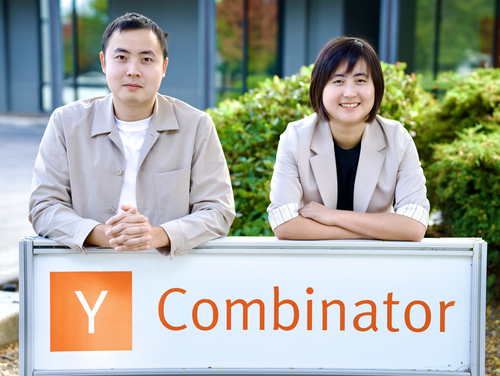
Ember was founded in 2022 by Charlene Wang and Warren Wang.


Investors · 12

How we know: the company's own site · the Y Combinator directory · hitconsultant.net · open dataset · 5k.vc investor directory · Not right? Tell us

How we know: the company's own site · hitconsultant.net · open dataset · 5k.vc investor directory · Y Combinator's founder network · Not right? Tell us
How we know: Ensemble Labs's portfolio page · Y Combinator's founder network · Not right? Tell us
How we know: Transpose Platform Management's portfolio page · Y Combinator's founder network · Not right? Tell us

.jpeg)
How we know: open dataset · 5k.vc investor directory · Not right? Tell us
-2.png)
How we know: Y Combinator's founder network · Not right? Tell us

How we know: open dataset · 5k.vc investor directory · Not right? Tell us

How we know: open dataset · 5k.vc investor directory · Not right? Tell us
How we know: Y Combinator's founder network · Not right? Tell us
How we know: open dataset · 5k.vc investor directory · Not right? Tell us

How we know: Y Combinator's founder network · Not right? Tell us
Funding
SEC filings, press & company announcements$4.3M disclosed across 1 of 2 rounds · 2025
- Undisclosed amountSeedDec 2025Source ↗
- $4.3MSeedNov 2025 · 3 sources
Nexus Venture Partners (lead), Y Combinator (lead)
Source ↗
Source: company announcements and press reports — follow each round's link for the claim.
Company profile
researched Aug 2026Ember (Ember AI) offers an AI revenue integrity and compliance platform aimed at specialty physician practices and health systems. The product layers on top of a provider's existing EHR and practice management systems to audit clinical documentation and coding before claims are submitted, and to work denials after they occur. The company positions the platform as specialty-agnostic, with workflows tailored to behavioral health, cardiology, dermatology, gastroenterology, ophthalmology, orthopedics, ENT and allergy, radiology, urology, and other procedure-heavy specialties with complex coding and payer scrutiny.
The platform is organized around three components: a Data Engine that unifies clinical documentation, coding decisions, payer policy, and contract terms across encounters and providers; a Coding Engine that reviews 100% of encounters against national standards, payer-specific policies, internal guidelines, and contracts, attaching a rule citation to every flag; and an Appeal Engine that reads CARC and RARC remittance codes, identifies applicable LCD/NCD policy and contract terms, drafts appeal letters, assembles documentation, and tracks claims through adjudication. Functional modules span documentation intelligence, coding compliance, denial intelligence, appeals automation, contract intelligence for payer rate benchmarking, and revenue recovery for payment variances, short pay, and downcoding.
Two workflows account for most customer usage: pre-bill audit, which ingests clinical notes, codes, and charge files, validates CPT, ICD-10, HCPCS, modifiers, documentation completeness, payer policy, and contracts, returns cited corrections, and surfaces recurring patterns as provider-level feedback; and automated appeals, which identifies denial root causes, retrieves records, and pushes appeals through to resolution.
Business model
Ember sells software to healthcare providers, deployed as a layer over existing EHR and practice management systems rather than replacing them; the company describes customer results in terms of ROI, recovered revenue, and staff hours saved.
Traction
The website cites measured outcomes from live deployments, including 57% fewer denials, 3.3x ROI in the first month, 100+ FTE hours saved per month, and a 9.3% increase in net revenue per appointment, along with pre-bill audit results of a 23-point improvement in clean-claim rate and 5% higher net collected revenue, and 3.1x faster appeal turnaround. Unnamed executives at specialty groups and health systems are quoted as production customers.
▸Full profile — market position, technology, go-to-market
Market position
Positions itself in the AI revenue cycle management and revenue integrity segment serving specialty practices and health systems, framing the problem as payers using automation to deny claims faster than manual A/R teams can respond.
Ember contrasts itself with AI revenue cycle management tools that sample a fraction of charts and return an opaque risk score, stating that it reviews every encounter, cites the specific rule behind each flag (for example a missing modifier 25 on an E/M with a same-day procedure, citing a CMS NCCI PTP edit and an LCD), and carries work through to a paid appeal.
Technology
The platform combines a data layer bridging clinical and financial records with automated coding review and appeal generation. Coding checks reference CMS rules, NCCI procedure-to-procedure edits, LCD/NCD coverage policies, payer-specific policies, and contract terms, and each flag carries the underlying rule citation. The appeal engine parses CARC and RARC codes to determine root cause and drafts cited appeal packets. Integrations are listed with EHR and practice management systems including athenahealth, ModMed, eClinicalWorks, Nextech, Veradigm, NextGen, Epic, Oracle Cerner, HST Pathways, Surgical Information Systems, AdvancedMD, DrChrono, and Altera, plus clearinghouses and billing platforms Availity and Waystar, and Medicare and Medicaid payers. The company lists SOC 2 Type II, HITRUST e1, and HIPAA compliance.
Go-to-market
Direct sales via demo requests and a diagnostic offer in which prospects submit 30 days of denial data or a few hundred cases and receive initial analysis within three days; full integration is described as taking weeks, with implementation sitting on top of incumbent systems.
Specialty physician practices and health systems, particularly those with high procedure volume, complex coding, and significant payer scrutiny; buyers referenced include chief medical officers, VPs of revenue cycle, directors of billing, and CFOs.
Compiled by commissioned research from 1 cited public sources — announcements, filings, and press listed under research sources below.
Key figures
latest reportedCompany-reported or press-reported figures, each dated to when it was claimed — not independently audited.
Images
Related companies · 4


Companies working in the same space as Ember.
Legal entities · 1
corporate structureIn the news
▸Research sources · 1
primary sources listed
- Emberembercopilot.ai · web
1 public sources were cited for this profile; the first-party ones are listed here.
Frequently asked questions
- What does Ember do?
- Ember is an AI revenue integrity platform that audits clinical charts and automates denial appeals for specialty medical practices.
- Who founded Ember?
- Ember was founded by Charlene Wang, Warren Wang in 2022.
- Who are Ember's investors?
- Ember's investors include Y Combinator, Nexus Venture Partners, Ensemble Labs, Transpose Platform Management, 2150, AENU, Amino Capital, Anthemis Venture and 4 more.
- How much funding has Ember raised?
- Ember has disclosed $4.3M raised across 1 of its 2 known rounds.
- Where is Ember headquartered?
- Ember is headquartered in San Francisco, US.