 Fundraising Fox
Ecotone Renewables
Pittsburgh, US · Founded 2019 · 24 employees on LinkedIn · 7 known investors
Find your way into Ecotone Renewables
Sign up to see every warm intro you have to Ecotone Renewables
- Paths you didn't know you had: your email and LinkedIn already hold routes to the Ecotone Renewables team. We find them for you
- 2nd- and 3rd-degree connections: the friend-of-a-friend routes that take hours to manually find through your inbox or LinkedIn
- Answers now, not in days: momentum is everything in a raise. Skip asking around whether someone knows someone
Days of research, done the moment you sign in, with every route ranked by how warm it is.
Pittsburgh-based company that turns food waste into liquid fertilizer and biogas using container-based anaerobic digesters.
Also known as Ecotone
Founders & leadership
Ecotone Renewables was founded in 2019 by Elliott Bennett, Dylan Lew, and Kyle Wyche.

Board
Investors · 7

How we know: the VCSheet dataset · open dataset · 5k.vc investor directory · Not right? Tell us

How we know: Earth Foundry's portfolio page · research · ideas.everywhere.vc · Not right? Tell us

How we know: Energy Foundry's portfolio page · the VCSheet dataset · open dataset · 5k.vc investor directory · Not right? Tell us
How we know: Everywhere Ventures's portfolio page · Not right? Tell us
__Twitter.png)

Reported raises · per SEC filings
Form D private placements$4.5M disclosed across 1 of 3 rounds · 2024–2025
▶$4.5MraisedNov 2025 · 39 investors · OtherRule 506(b)
- Kyle WycheExecutive Officer
- Elliott BennettExecutive Officer
- Judy LiDirector
- Dylan LewExecutive Officer, Director
- Offering amount
- $7.5M
- Amount sold
- $4.5M
- Proceeds to insiders
- $495K
- First sale
- Jun 2024
- Incorporated
- Other, Delaware, 2022
- Federal exemptions
- 06b
Source: SEC EDGAR Form D. Amounts as filed; amended filings shown once at their latest values.
Company profile
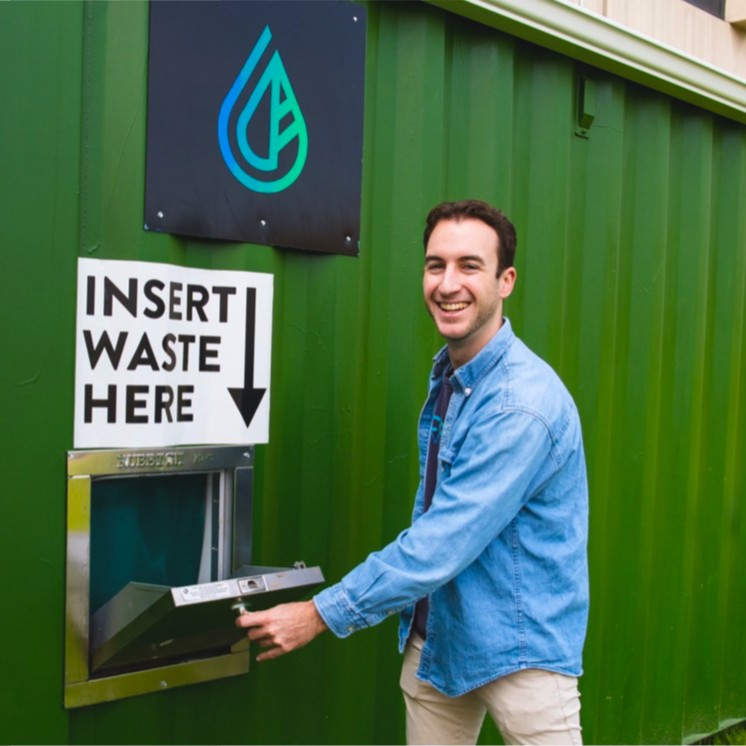
researched Aug 2026Ecotone Renewables is a Pittsburgh-based food waste company that builds and operates ZEUS (Zero Emissions Upcycling System), a patented anaerobic digestion system housed in recycled shipping containers. Waste is deposited through a chute in compostable bags; the system grinds the material, mixes it with rain water and moves the slurry from a dosing tank into a "stomach" tank where biodegradation occurs over a period of weeks. The process is automated, including feeding, pH balancing and temperature regulation, and produces two outputs: a high-methane biogas that powers the unit itself, and Soil Sauce, a nutrient-rich liquid fertilizer positioned as an alternative to synthetic fertilizers. Units also contain sensors, tanks, grinders and camera sensors paired with a machine learning algorithm that detects, aggregates and reports what is being discarded by type and weight, which customers use to reduce waste-related costs. Digester exteriors are painted by local artists.
The company operates as a public benefit corporation and sells on-site food waste management to institutional and commercial clients, including schools, hospitals, corporate offices, restaurants, hotels, senior centers and municipalities. Named partners and customers include the City of Pittsburgh, Allegheny Health Network, the University of Pittsburgh, Bryant University, Pittsburgh International Airport, Meta, Plant City X and Compass Group Canada. Soil Sauce is also sold commercially through more than 50 Pittsburgh-area retailers. Ecotone reports that each ZEUS unit diverts up to 130 tons of CO2 equivalents per year, and management describes the units as carbon sinks as well as composters.
Deployment is the company's primary internal success metric. Eight biodigesters had been deployed and operated across the Northeast as of December 2024, rising to 12 units by September 2025, half of them in Pittsburgh. Stated targets include roughly 40 new biodigesters in the year following December 2024, 10,000 systems within a few years, and eventually millions of units globally.
Founding story
The company originated in a student group spanning Carnegie Mellon University, the University of Pittsburgh and the University of Michigan that built the Portable Farm Aquaponics System, described as Pittsburgh's first portable farm, in downtown Pittsburgh. Dylan Lew joined as a Carnegie Mellon freshman studying materials science and engineering; his initial tasks included cleaning the fish tank and determining what to do with biogas from an early biodigester design. Concluding that aquaponics only worked at industrial scale, the group pivoted to food waste processing and to whether such a system could fit inside a shipping container, which led to Ecotone Renewables in 2019. Lew met co-founder Kyle Wyche through the Carnegie Mellon and University of Pittsburgh startup ecosystem and recruited him for operations; Lew and Elliott Bennett had been friends since childhood, and Bennett brought marketing, finance and sales experience. Additional students, including Sasha Cohen Ioannides, Vinh Luong and Catie Schrading, contributed to the first digester prototype.
Business model
Ecotone Renewables builds, deploys and operates ZEUS digesters for customer sites, handling the build and operation of the systems on behalf of clients, and separately sells the resulting Soil Sauce liquid fertilizer as a consumer/retail product. It is structured as a public benefit corporation.
Revenue comes from customer deployments of ZEUS digesters for on-site food waste processing, plus retail sales of the Soil Sauce liquid fertilizer. Management cited a roughly $600,000 run rate by the end of 2024 and a $3 million run-rate target by mid-2025.
Traction
Eight biodigesters deployed and operated across the Northeast as of December 2024, increasing to 12 by September 2025. Soil Sauce is stocked by more than 50 retailers. Reported partners and customers include the City of Pittsburgh, Allegheny Health Network, the University of Pittsburgh, Bryant University, Pittsburgh International Airport, Meta, Plant City X and Compass Group Canada. Management cited a roughly $600,000 run rate at the end of 2024 with a $3 million target for mid-2025, about $1.4 million in pre-seed funding, a $3 million seed round, and a $2.4 million USDA grant.
Latest developments
As of September 2025 the company had deployed 12 ZEUS units, half in Pittsburgh, and reported $3 million in private investment and a $2.4 million USDA grant supporting manufacturing capacity and expansion into New England and Southern California. Stated goals include 10,000 systems within a few years and eventually millions of digesters worldwide.
▸Full profile — market position, technology, go-to-market, geography, history, risks & controversies
Market position
Ecotone Renewables positions itself in on-site food waste processing as an alternative to landfill hauling and conventional composting, emphasizing a quick-to-implement, odorless and automated system for organizations with unmet waste-reduction targets. Its founders describe it as a hardware-centric cleantech business in a venture market weighted toward software.
Differentiating elements cited include a patented containerized anaerobic digestion system that is automated and odorless, on-site processing in a matter of weeks, waste-composition analytics from camera sensors and machine learning, biogas that powers the unit itself, a saleable fertilizer byproduct, and artist-painted digester exteriors. Management identifies feedstock unpleasantness and financing as the two main barriers to adoption of food waste solutions.
Technology
ZEUS is a patented anaerobic food waste processing system built into recycled shipping containers. Food waste enters via a chute, is ground and mixed with rain water, then passes from a dosing tank to a second tank where microbes and fungi digest it over several weeks. Outputs are a high-methane biogas used to power the system and Soil Sauce liquid fertilizer. Onboard sensors, grinders, tanks and camera sensors with a machine learning algorithm identify and report the composition and weight of discarded food. Feeding, pH balancing and temperature regulation are automated, and the enclosure is designed so engineers can update hardware without disrupting the customer-facing interface.
Go-to-market
The company sells directly to institutional and commercial accounts and, following its 2024 seed round, funded an expanded sales team and sales funnel alongside engineering hires. Growth is measured by the number of digesters deployed. Soil Sauce provides an additional consumer-facing channel through more than 50 retailers, and painted digester exteriors give the units local visibility.
Schools and universities, hospitals and health systems, corporate offices, restaurants and meal-prep operators, hotels, senior centers, airports and municipal governments, particularly organizations with waste-reduction goals or high landfill hauling costs.
Geography
Headquartered in Pittsburgh, Pennsylvania, with deployments across the northeastern United States; half of the 12 units deployed as of September 2025 were in Pittsburgh. Its first international client, Compass Group Canada, was expected to bring a digester to Toronto. Expansion plans target New England and Southern California.
History
Founded in 2019 out of a multi-university student project, Ecotone Renewables developed the ZEUS containerized digester and moved into a commercialization phase, raising about $1.4 million in pre-seed funding and deploying eight units across the Northeast by late 2024. In 2024 it signed its first international client, Compass Group Canada, and the co-founders were named to the Forbes 30 Under 30 list; Lew also received a 2024 Recent Alumni Outstanding Achievement Award from Carnegie Mellon's College of Engineering. The company announced a $3 million seed round reported in January 2025 and, by September 2025, had 12 units deployed alongside a $2.4 million USDA grant and plans to build manufacturing capacity and expand into New England and Southern California.
Risks & controversies
Management noted shifting federal policy under the second Trump administration as a headwind for sustainability businesses, stating the company expects to rely more on private companies to lead adoption. Leadership also identified unpleasant feedstock handling and customer financing as the two principal barriers to adoption of food waste solutions.
Compiled by commissioned research from 5 cited public sources — announcements, filings, and press listed under research sources below.
Key figures
latest reportedCompany-reported or press-reported figures, each dated to when it was claimed — not independently audited.
Timeline · 5
launches, deals, and filingsAlongside $3 million in private investment, the company reported a $2.4 million USDA grant supporting manufacturing capacity and expansion into New England and Southern California.
$2.4M source ↗
The company raised $3 million in seed funding, with investors including Earth Foundry and Cisco, to fund R&D, engineering and sales hiring, increased ZEUS digester deployment, and international expansion with Compass Group Canada in Toronto.
$3M source ↗
Ecotone Renewables signed Compass Group Canada, a foodservice and hospitality company, as its first international client, with a digester expected in Toronto by the end of 2024.
Dylan Lew received a 2024 Recent Alumni Outstanding Achievement Award from Carnegie Mellon University's College of Engineering and spoke at the Scott Institute for Energy Innovation's Entrepreneurial Student Lunch Seminar.
Co-founders Dylan Lew, Kyle Wyche and Elliott Bennett were named to the Forbes 30 Under 30 list shortly before the company's seed round.
Dated company events from announcements, filings, and press; legal rows summarize public dockets and regulator releases.
▸Research sources · 5
primary sources listed
- Turning Food Waste into Fertilizer: Ecotone Renewables Secures $3M to Scale Sustainabilityideas.everywhere.vc · web
5 public sources were cited for this profile; the first-party ones are listed here.
Frequently asked questions
- What does Ecotone Renewables do?
- Pittsburgh-based company that turns food waste into liquid fertilizer and biogas using container-based anaerobic digesters.
- Who founded Ecotone Renewables?
- Ecotone Renewables was founded by Elliott Bennett, Dylan Lew, Kyle Wyche in 2019.
- Who are Ecotone Renewables's investors?
- Ecotone Renewables's investors include Avesta Fund, Earth Foundry, Energy Foundry, Everywhere Ventures, Gaingels, SSC Venture Partners, Cisco Investments.
- How much funding has Ecotone Renewables raised?
- Ecotone Renewables has disclosed $4.5M raised across 1 of its 3 known rounds.
- Where is Ecotone Renewables headquartered?
- Ecotone Renewables is headquartered in Pittsburgh, US.