 Fundraising Fox
Canza Finance
also invests · investor profile12 known investors
Find your way into Canza Finance
Sign up to see every warm intro you have to Canza Finance
- Paths you didn't know you had: your email and LinkedIn already hold routes to the Canza Finance team. We find them for you
- 2nd- and 3rd-degree connections: the friend-of-a-friend routes that take hours to manually find through your inbox or LinkedIn
- Answers now, not in days: momentum is everything in a raise. Skip asking around whether someone knows someone
Days of research, done the moment you sign in, with every route ranked by how warm it is.
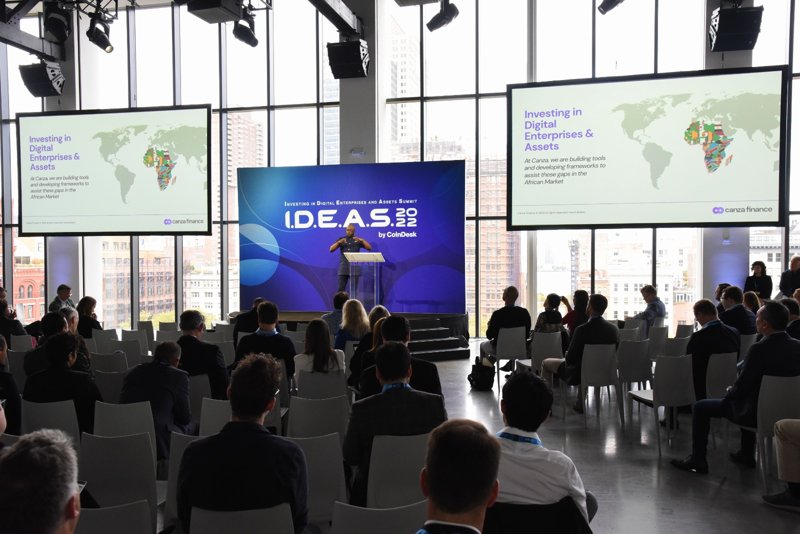
Canza Finance is a Web3 company combining DeFi, crypto-assets, and traditional financial infrastructure to provide financial products for individuals and businesses in Africa and other emerging markets. Its offerings include a real-world asset marketplace and a cross-border transaction exchange.
Also known as Canza
Founders & leadership

Investors · 12
How we know: Fenbushi Capital's portfolio page · funding news · Not right? Tell us

How we know: Flori Ventures's portfolio page · the VCSheet dataset · Not right? Tell us

How we know: mariblock.com · Not right? Tell us
How we know: mariblock.com · Not right? Tell us
How we know: funding news · Not right? Tell us
How we know: funding news · Not right? Tell us

How we know: mariblock.com · Not right? Tell us
How we know: press coverage · research · mariblock.com · Not right? Tell us
Also in the syndicate · 2
Funding
SEC filings, press & company announcements$5.6M disclosed across 2 of 5 rounds · 2020–2024
- $2.3Mstrategic funding roundJan 2024 · 2 sources
Polychain Capital (lead), 99 Capital, Blizzard fund, Blizzard Fund (Avalanche), Hyperithm, Protocol Labs, Stratified Capital
Source ↗ - $3.3MSeed FundingMar 2022 · 2 sourcesSource ↗
Source: company announcements and press reports — follow each round's link for the claim.
Company profile
researched Aug 2026Canza Finance is a Web3 company that combines decentralized finance, crypto-assets and traditional financial infrastructure to deliver financial services to individuals and businesses in Africa and other emerging markets. It describes itself as an open finance portal and a settlement layer for stablecoin liquidity and real-world assets (RWA), offering a marketplace through which businesses and individuals can access investment assets, alongside liquidity provision and over-the-counter trading.
The product suite includes Baki, a live exchange for African currencies that lets users deposit stablecoins and mint overcollateralized synthetic assets (zTokens) pegged to African currencies such as the naira (zNGN), West African CFA (zCFA) and South African rand (zZAR); CAPP (Canza Autonomous Payment Protocol), a multi-agent framework for cross-border commerce deployed on Aptos; CXDS, an in-development protocol for creating credit default swaps on exchange deposits as an alternative to traditional insurance; and $CAN, a planned native utility token intended to incentivize ecosystem participation. Earlier coverage described the company as a Web3 neobank focused on cross-border payments for African businesses, working with on- and off-ramp partners and local FX agents to settle international trade — for example collecting naira in Nigeria, converting to stablecoins and paying a supplier in fiat abroad.
The company states it has implemented security processes and tooling across its applications, operates a compliance-oriented environment, and integrates with third-party blockchain tools.
Founding story
Co-founders Pascal Ntsama and Oyedeji Oluwoye, both former AT&T employees, identified gaps in African cross-border payments and forex liquidity, where traditional banking processes and high fees excluded much of the population. In 2020 they joined the Tachyon-backed Filecoin Launchpad Accelerator run with Protocol Labs, which provided mentorship and resources and led to an initial $2.1 million funding round. Oluwoye subsequently relocated from Australia to Nigeria to build the product from within the local market.
Business model
Canza operates a suite of on-chain financial products — an FX/synthetic-asset exchange (Baki), a cross-border payment protocol (CAPP), a credit default swap protocol (CXDS) and an RWA marketplace — supported by a network of local money market players, FX agents and on/off-ramp partners in African markets, with a planned native utility token ($CAN) to incentivize ecosystem participation.
Coverage describes cross-border settlement and currency-swap services delivered at a reported transaction cost of about 1%, positioned against the higher fees of traditional forex and remittance channels.
Traction
Baki is listed as live and CAPP as on chain, with CXDS in development and the $CAN token yet to launch. As of the January 2024 strategic round the company reported roughly $5.5-5.57 million in total funding and cited Nigeria, Cameroon, Senegal and the United States as its biggest markets, with most trades in the Africa-Asia and Africa-Middle East corridors and registered institutional interest. Its published roadmap targets over $1B in annual TVL and over $25M AUM by Q4 2025.
Latest developments
The company has joined CoinMarketCap's CMC Labs accelerator and partnered with Klickl on payment infrastructure and account management for emerging-market users. Its roadmap runs through 2025 with milestones including an RWA marketplace security audit, fiat-to-zToken rails and forwards and futures contracts on Baki, CXDS testnet and mainnet launches, expanded zAsset coverage (zEUR, zGold, zBTC), Mauritius and Nigeria virtual asset licenses, an OTC CRM platform on JaraNetwork, and ambassador, grant and hackathon programs.
▸Full profile — market position, technology, go-to-market, geography, history, risks & controversies
Market position
Canza positions itself as a settlement layer for stablecoin liquidity and real-world assets in emerging markets, aiming to build a large non-institutional financial system. Its cross-border settlement service competes with other crypto entities and the over-the-counter markets that dominate the sector across Africa, including Helicarrier's Desk service.
Rather than relying on dollar stablecoins priced at parallel-market rates, Canza's Baki protocol mints synthetic assets pegged to African currencies to address liquidity and exchange-rate disparities, targeting slippage-free swaps at official central bank rates. The founders emphasize an on-the-ground approach, with a co-founder relocating from Australia to Nigeria to build within the local market.
Technology
The stack is built on Web3 and DeFi infrastructure. Baki allows users to deposit stablecoins and mint overcollateralized synthetic zTokens pegged to African currencies, described as the first on-chain implementation of African stablecoins, with planned forwards and futures contracts, APIs and additional stablecoin collateral such as USDT and USDS. CAPP is a multi-agent framework deployed on Aptos for cross-border commerce, and CXDS enables on-chain credit default swaps on centralized exchange deposits. Roadmap items include security audits, DEX listings for zAssets, network bridges for asset swaps and a Telegram AI price/rate agent bot.
Go-to-market
Distribution is built around partnerships with local money market players, FX agents and on/off-ramp providers in African countries, supplemented by regulatory licensing in target jurisdictions, ecosystem programs such as ambassador, grant and hackathon initiatives, and accelerator and partner relationships including Protocol Labs, CoinMarketCap's CMC Labs and Klickl.
Businesses and SMEs in emerging markets, particularly African importers, exporters and startups needing foreign exchange and cross-border settlement, local foreign exchange agents, and individual users seeking access to investment assets; the company has also cited institutional investor interest for liquidity.
Geography
Focused on Africa and other emerging markets. Reported largest markets are Nigeria, Cameroon, Senegal and the United States, with trade flows concentrated in the Africa-Asia and Africa-Middle East corridors. Licensing plans span a Money Services Business license in the United States, a foreign exchange license in Nigeria and virtual asset licenses from the Financial Services Commission of Mauritius. The team is described as global.
History
The company's partnership with Protocol Labs dates to 2020 via the Filecoin Launchpad Accelerator, followed by an initial $2.1 million round. It raised a $3.27 million seed round, and in January 2024 announced a $2.3 million strategic round led by Polychain Capital to fund licensing and its Baki FX DeFi platform. The product line has since broadened from cross-border settlement toward an RWA marketplace, the CAPP payment protocol on Aptos, the CXDS credit default swap product and a planned $CAN token.
Risks & controversies
Adoption is a stated challenge: the model depends on counterparties willing to provide on- and off-ramp services between fiat and Canza's synthetic tokens, and little has been disclosed about how adoption will be driven amid mixed and inconsistent regulatory stances across African jurisdictions. The business is also dependent on obtaining licenses in multiple markets, and it operates in a crowded, largely opaque over-the-counter cross-border settlement market. The company declined to disclose its valuation at the 2024 round.
Compiled by commissioned research from 8 cited public sources — announcements, filings, and press listed under research sources below.
Key figures
latest reportedCompany-reported or press-reported figures, each dated to when it was claimed — not independently audited.
Timeline · 5
launches, deals, and filingsCanza Finance joined CoinMarketCap's CMC Labs accelerator program to support scaling of its Web3 financial infrastructure and global expansion.
Canza Finance partnered with Klickl to enhance payment infrastructure and streamline account management for users across emerging markets.
The Canza Autonomous Payment Protocol (CAPP), a multi-agent framework for cross-border commerce, is listed as on chain on Aptos, alongside the live Baki exchange, CXDS in development and the $CAN token described as launching soon.
Canza Finance announced a $2.3 million strategic funding round led by Polychain Capital, with participation from Protocol Labs, Avalanche's Blizzard Fund, 99 Capital, Stratified Capital and Hyperithm. Proceeds are earmarked for DeFi infrastructure development, the Baki FX platform and licensing across African jurisdictions. The company declined to disclose its valuation.
$2.3M source ↗
Pascal Ntsama and Oyedeji Oluwoye entered the Tachyon-backed Filecoin Launchpad Accelerator program, beginning Canza's relationship with Protocol Labs and leading to an initial $2.1 million funding round.
Dated company events from announcements, filings, and press; legal rows summarize public dockets and regulator releases.
▸Research sources · 8
primary sources listed
- Canza Financecanza.io · web
8 public sources were cited for this profile; the first-party ones are listed here.
Frequently asked questions
- What does Canza Finance do?
- Web3 financial infrastructure company building stablecoin FX, payments and real-world-asset products for African and emerging markets.
- Who founded Canza Finance?
- Canza Finance was founded by Pascal Ntsama IV, Oyedeji Oluwoye.
- Who are Canza Finance's investors?
- Canza Finance's investors include Adaverse, Fenbushi Capital, Flori Ventures, Hyperithm, Mapleblock Capital, Stratified Capital, Bixin Ventures, Dominance Ventures and 2 more.
- How much funding has Canza Finance raised?
- Canza Finance has disclosed $5.6M raised across 2 of its 5 known rounds.