 Fundraising Fox
株式会社AIメディカルサービス
Tokyo, JP · Founded 2017 · 45 employees on LinkedIn · 15 known investors
Find your way into 株式会社AIメディカルサービス
Sign up to see every warm intro you have to 株式会社AIメディカルサービス
- Paths you didn't know you had: your email and LinkedIn already hold routes to the 株式会社AIメディカルサービス team. We find them for you
- 2nd- and 3rd-degree connections: the friend-of-a-friend routes that take hours to manually find through your inbox or LinkedIn
- Answers now, not in days: momentum is everything in a raise. Skip asking around whether someone knows someone
Days of research, done the moment you sign in, with every route ranked by how warm it is.
AI Medical Service Inc. develops AI systems that support image-based diagnosis of endoscopy, primarily for detecting gastrointestinal cancers such as stomach and esophageal cancer. The Japan-based medical device company sells its gastroAI product line to endoscopy and gastroenterology settings, with operations expanding to the US and Southeast Asia.
Also known as AI Medical Service Inc. · AIM · AIメディカルサービス
Founders & leadership
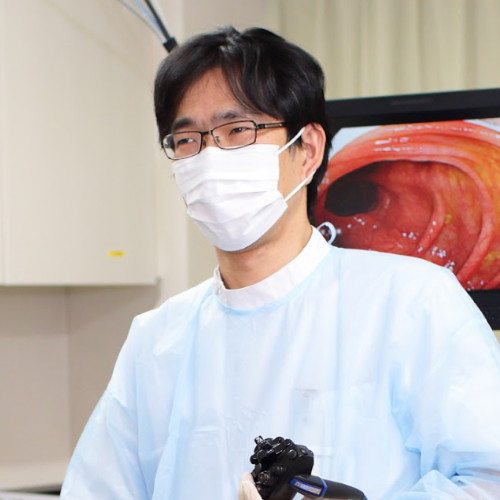
株式会社AIメディカルサービス was founded in 2017 by Tomohiro Tada.
Investors · 15
How we know: Globis Capital Partners's portfolio page · the company's own site · Not right? Tell us
How we know: the company's own site · research · ai-ms.com · Not right? Tell us
How we know: research · ai-ms.com · Not right? Tell us

How we know: Sony Ventures Corporation's portfolio page · the VCSheet dataset · Not right? Tell us
Also in the syndicate · 9
Company profile
researched Aug 2026株式会社AIメディカルサービス (AI Medical Service Inc.) develops artificial-intelligence software that assists physicians in interpreting endoscopic images of the gastrointestinal tract, together with related businesses. Founded on 1 September 2017 and headquartered in the Hareza Tower in Higashi-Ikebukuro, Toshima-ku, Tokyo, the company frames its mission as eliminating missed cancers in endoscopy, noting that gastrointestinal cancers account for roughly 30% of all cancer deaths and that about 20% of early cancers are said to be missed during human-read endoscopy.
Its commercial line comprises gastroAI model-G2, endoscopic image diagnosis support software that detects regions suspected of being early gastric cancer or adenoma; gastroAI model-EIRL, diagnosis-support software targeting colorectal polyps; and gastroBASE screening X, a cloud-based image-reading support platform that processes images from digital X-ray and endoscopy equipment for clinical reading, including sharing of gastric endoscopy screening and secondary reading data. The company also runs gastroAI media (also referred to as 内視鏡AI.com), an information site for endoscopists.
As of September 2025 the company reported approximately 100 people including officers and interns, and capital of ¥13.8 billion including capital reserves. It holds ISO 27001 and ISO 27701 certifications (November 2022) and ISO 13485 (December 2022).
Founding story
The company was founded in September 2017 by Tomohiro Tada, a clinician who has performed more than 20,000 endoscopic examinations and who opened the Tada Tomohiro Gastroenterology and Proctology clinic in 2006. According to his message on the company site, the effort began with practical clinical problems — the difficulty of spotting small lesions in an inflamed gastric wall even for specialists with over a decade of experience, and the reading burden on double-check physicians handling up to 3,000 images a day — and was prompted by University of Tokyo professor Matsuo's observation that AI image-recognition capability had begun to surpass humans. The team built an image database by reviewing images one by one and applied deep learning until discrimination accuracy exceeded the average of specialist physicians.
Business model
The company develops and sells regulatory-approved endoscopic image diagnosis support software as medical devices, complemented by a cloud-based image-reading support service (gastroBASE screening X) for gastric endoscopy screening and secondary reading. It also conducts joint research with medical institutions and operates a specialist media property for endoscopists.
Revenue derives from sales of its approved endoscopy AI software products, which began in March 2024, and from its cloud-based reading support platform provided to clinical settings.
Traction
More than 50 papers in top journals, joint research with over 100 medical institutions in Japan and with overseas centers including National University Hospital Singapore and Memorial Sloan Kettering Cancer Center, plus reported research ties with Stanford University School of Medicine. Twelve abstracts from the group were accepted at Digestive Disease Week, one selected as "Best of DDW". Three domestic manufacturing and marketing approvals had been obtained by May 2026, and gastroAI-model G received a Nikkei Superior Products and Services Award startup category prize for 2024.
Latest developments
Manufacturing and marketing approval for its third domestic AI product, gastroAI model-G3, was obtained in May 2026. Recent company notices cover media coverage in the Nikkei morning edition and Nikkei Online (July 2026), coverage of the AI Medical Device Council chaired by representative director Tada (July 2026), and coverage in Weekly Economist (June 2026).
▸Full profile — market position, technology, go-to-market, geography, history
Market position
The company positions itself as a leading player in endoscopy AI, citing more than 50 published AI papers, world-first publications on AI for H. pylori discrimination (2017) and gastric cancer detection (2018), and demonstration in April 2020 that its gastric cancer detection AI significantly exceeded endoscopy specialists in sensitivity. Investor commentary at the Series B described it as holding one of Japan's largest accumulations of endoscopic images and paper data in a market with few entrants.
Compared with much of the field, which the company says concentrates on colorectal polyps and still images, it targeted early gastric cancer as its first product and developed video-capable AI covering detection, discrimination and lesion-extent display. It also cites joint research with more than 100 medical institutions — including the Cancer Institute Hospital of JFCR, Osaka International Cancer Institute, the University of Tokyo Hospital and Keio University Hospital — as a data-supply base.
Technology
The products apply deep learning to endoscopic images to detect and characterize lesions. Capabilities described include detection (lesion pick-up), discrimination of lesion state, and display of lesion extent, with work spanning still images and video, and covering gastric cancer, esophageal cancer, colorectal lesions, ulcerative colitis state assessment and capsule endoscopy. Products under development were confirmed compliant with IEC 62304 and IEC 62366-1 in July 2021.
Go-to-market
Products reach the market through Japanese regulatory approval followed by domestic sales from March 2024, overseas device registration in Singapore and Thailand, and distribution/alliance arrangements; Ryoyo Electro supports end-to-end introduction of the company's AI endoscopic image diagnosis support software into clinical settings, and a March 2024 business alliance with LPIXEL was reported. Joint research agreements with domestic and overseas hospitals support clinical validation, and the company recruits directly through its own careers site and internship program.
Endoscopists and gastroenterology departments at hospitals and clinics, including screening programs performing gastric endoscopy and secondary image reading.
Geography
Headquarters in Toshima-ku, Tokyo, with a US entity at the Chrysler Building, 405 Lexington Ave., New York (US subsidiary first established in Silicon Valley in January 2022; New York office opened January 2023) and a Singapore entity at Westgate Tower, 1 Gateway Drive. Products have been registered in Singapore (February 2024) and approved in Thailand (June 2025).
History
After its September 2017 founding, the company published what it describes as world-first papers on AI detection of gastric cancer in still images (January 2018), esophageal cancer (January 2019) and gastric cancer in video (March 2019). It raised a Series A in August 2018 and a Series B in October 2019. In November 2019 an endoscopy AI system under development received FDA Breakthrough Device designation. Awards followed in 2020 (EY Innovative Startup 2020, the 5th JEITA Venture Award, CEATEC AWARD 2020 Co-Creation PARK grand prize), and the office moved to Hareza Tower in August 2020. In 2021 the company signed a joint research agreement with National University Hospital, Singapore, launched the gastroAI Online research media, was selected as a World Economic Forum Technology Pioneer and as a J-Startup company, and applied for regulatory approval of its first domestic product. A US subsidiary was established in Silicon Valley in January 2022, a Series C closed in May 2022, a Singapore subsidiary followed in July 2022 and a New York office in January 2023. Manufacturing and marketing approval for gastroAI model-G was obtained in December 2023, with device registration completed in Singapore in February 2024, approval of gastroAI model-G2 in December 2024, Thai medical device approval in June 2025 and approval of gastroAI model-G3 in May 2026.
Compiled by commissioned research from 8 cited public sources — announcements, filings, and press listed under research sources below.
Key figures
latest reportedCompany-reported or press-reported figures, each dated to when it was claimed — not independently audited.
Timeline · 25
launches, deals, and filingsAlliance reported to accelerate deployment of endoscopic image diagnosis support AI.
First domestic AI product approval in Japan; sales began in March 2024.
Second US location, opened in January 2023 at the Chrysler Building, 405 Lexington Ave.
Series C funding reported at a total of ¥8 billion, with participation including SoftBank Vision Fund 2 / SB Investment Advisers.
First overseas base, established in Silicon Valley in January 2022.
An endoscopy AI system under development received Breakthrough Device designation from the US Food and Drug Administration.
Third-party allotment led by funds managed by Globis Capital Partners, WiL, Sparx Group and Sony Innovation Fund by IGV, with Nihon Lifeline, Japan Post Capital, Aflac Ventures, Ryoyo Electro, SMBC Venture Capital and Daiwa Corporate Investment participating; proceeds directed to clinical trials, pipeline expansion, hiring and capital investment.
$42.9M source ↗
The company raised approximately ¥1 billion from Incubate Fund in August 2018, recorded on its history page as its Series A round.
Dated company events from announcements, filings, and press; legal rows summarize public dockets and regulator releases.
▸Research sources · 8
primary sources listed
- 株式会社AIメディカルサービスai-ms.com · web
8 public sources were cited for this profile; the first-party ones are listed here.
Frequently asked questions
- What does 株式会社AIメディカルサービス do?
- Japanese medical-device company developing AI software that supports endoscopic image diagnosis of gastrointestinal cancers.
- Who founded 株式会社AIメディカルサービス?
- 株式会社AIメディカルサービス was founded by Tomohiro Tada in 2017.
- Who are 株式会社AIメディカルサービス's investors?
- 株式会社AIメディカルサービス's investors include Globis Capital Partners, WiL, Japan Post Capital Co. Ltd., SoftBank Vision Fund, Sony Ventures Corporation, DCI Partners Co. Ltd..
- Where is 株式会社AIメディカルサービス headquartered?
- 株式会社AIメディカルサービス is headquartered in Tokyo, JP.